Latest posts
-
The Invisible Canvas: How Sound Transformed into Light, Mist, and Living Water
There was a defining moment at the turn of the nineteenth into the twentieth century when composers grew tired of telling traditional stories with a neat beginning, middle, and end. Instead, they decided to do something far more ambitious: they chose to paint. They discarded the rigid black lines of academic drawing and began to…
-
A Crystal Thread Across the Steppes: How Mikhail Pletnev Sculpted the Hidden Melancholy in Tchaikovsky’s Violin Concerto
If the history of Western music routinely couples Pyotr Ilyich Tchaikovsky’s Violin Concerto in D Major, Op. 35 with feverish pyrotechnics, raw speed, and the athletic virtuosity of its outer movements, there is an oasis of silence and melancholy right at the very heart of the work that demands something far rarer: the ability to…
-
The Voice of the Titan: How Mstislav Rostropovich Ripped Fire from the Cello and Defied History
If twentieth-century musical history needed a single figure to capture the essence of earth-shattering force, magnetic authority, and untamed passion, that name would undoubtedly be Mstislav Rostropovich. The Russian master did not merely play the cello; he physically dueled with the instrument, extracting a monumental, high-voltage sonority that seemed to erupt from the very depths…
-
The Dance of Glass and Sun: How Rossini’s String Sonatas Reinvented Lightness with High-Voltage Rhythm
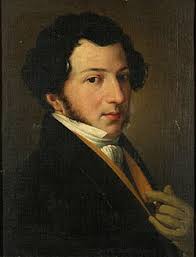
If the history of Western music routinely couples precocious genius with dramatic gravity or heavy intellectual density, there is one Italian boy who decided to conquer eternity through the sheer power of a smile, brilliance, and pure effervescence. His name was Gioachino Rossini. Long before he established himself as the absolute ruling monarch of European…
-
The Poetics of Twilight: How Ernest Chausson Transformed Melancholy into High-Definition Harmony
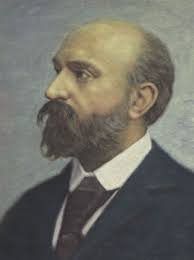
If the history of late-nineteenth-century French music boasts composers who painted bright, transparent, solar canvases, there is an aristocrat of sound who preferred to focus his genius on the colors of sunset, psychological mist, and the mystery of contained passions. His name was Ernest Chausson. Living at the very heart of a fermenting Paris—and being…
-
A Pistol in the Dark Cell: The Political Knockout of Fidelio and Beethoven’s Only (and Incendiary) Opera
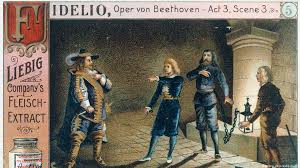
If opera history needed to pinpoint the exact moment when the stage stopped being mere court entertainment and became a burning political trench, that moment is called Fidelio. Ludwig van Beethoven spent his entire life fighting against the boundaries of musical form, but when he decided to write his only opera, he did something far…