Latest posts
-
Rhapsody in Blue by George Gershwin: The Raw Tactile Edge of the Big Band Arrangement
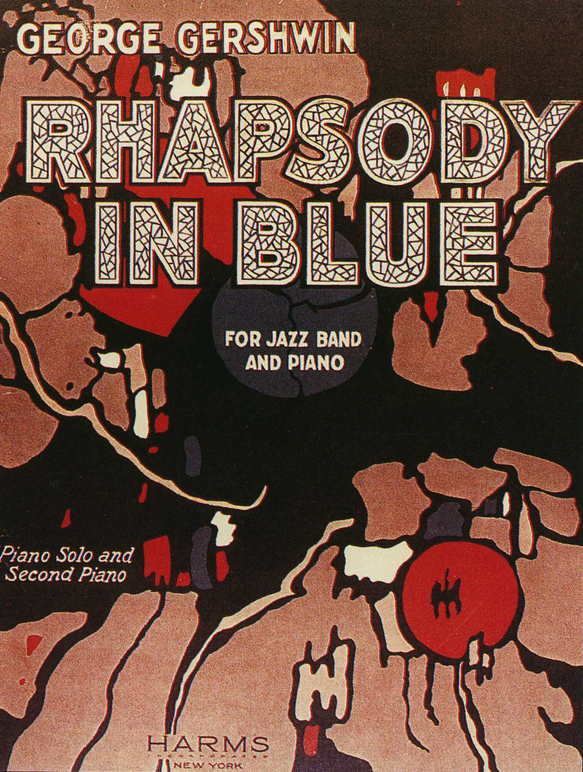
If the history of Western music boasts a definitive ground zero where the feverish asphalt of jazz and the marble of grand concert halls collided to create an entirely new organism, that landmark is George Gershwin’s Rhapsody in Blue. Premiered in 1924, the work was born from an audacious premise: to prove that American popular…
-
Fauré’s Dolly Suite: The Architecture of Affection and French Piano Elegance
If the history of Western music boasts a single corner where tenderness ceases to be a mere sentimental cliché and transforms into a monument of sophistication and architectural precision, that corner was sculpted by Gabriel Fauré. When the French master assembled, between 1893 and 1896, the six miniatures that comprise the Dolly Suite, Op. 56,…
-
Smoke and Razor: How Gerry Mulligan and Astor Piazzolla Sculpted the Night of Two Cities
If the history of twentieth-century music preserved a single moment where the geometric melancholy of North American jazz and the passionate violence of Nuevo Tango fused into an indestructible organism, that moment occurred in Milan during the autumn of 1974. It was there that baritone saxophonist Gerry Mulligan and bandoneón master Astor Piazzolla locked themselves…
-
Anatomy of Delirium: The Surgical Transparency and Athletic Rigor of Vladimir Horowitz at the Heart of Schumann
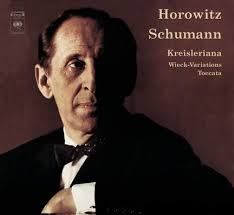
If the history of musical Romanticism required an architect to translate the exact duality of the human mind—torn between the purest sweetness and the abyss of madness—that architect would be Robert Schumann. Schumann did not merely write piano music; he transferred his own psychological diary onto the keys, fragmenting his persona between the poetic, dreaming…
-
The Palace of Sound and the Bow of Fire: The Architectural Knockout of Brahms’s Concerto with Karajan and Anne-Sophie Mutter
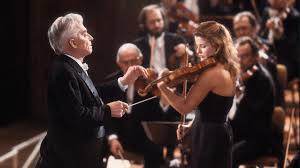
If the history of Western music boasts a single monument where the titanic force of an orchestra and the sovereign lyricism of a violin fuse into an indestructible structure, that monument is Johannes Brahms’s Violin Concerto in D Major, Op. 77. Written in 1878 for the virtuoso Joseph Joachim, this masterpiece categorically rejects the traditional…
-
The Pulse of the Earth: How Dvořák’s Slavic Dances Transformed Peasant Rhythm into High-Voltage Symphony
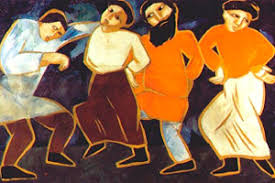
If the history of nineteenth-century musical nationalism needed to pinpoint the exact moment when the soul of a people stopped being a dry folkloric study and transformed into an orchestral earthquake of pure vitality, that moment is called Antonín Dvořák. When the Bohemian composer published his first set of Slavic Dances, Opus 46 in 1878,…