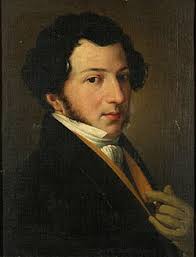
If the history of Western music routinely couples precocious genius with dramatic gravity or heavy intellectual density, there is one Italian boy who decided to conquer eternity through the sheer power of a smile, brilliance, and pure effervescence. His name was Gioachino Rossini. Long before he established himself as the absolute ruling monarch of European opera, a twelve-year-old Rossini spent the summer of 1804 sculpting a set of six works that completely defied the traditional sobriety of chamber music. His String Sonatas (Sei Sonate a quattro) are not the dry, academic exercises of a student; they are gems of a radiant, solar virtuosity, built entirely on agility, razor-sharp dialogue, and a zest for life that leaps off the score directly into the listener’s nervous system.
To listen to the String Sonatas today is an intensely tátil, fresh, and invigorating experience. It is a luminous aesthetic born of a mid-day Mediterranean sun, where every single bow striking the strings carries the pristine clarity of cut glass and a rhythmic pulse that is pure high-definition cinematic movement.
The Playful Prodigy and the Instrumental Revolution
Rossini scored these sonatas for an highly unusual instrumental line-up: two violins, a cello, and a double bass, completely discarding the traditional viola. This architectural choice was no mere whim; by carving out a massive acoustic space between the soaring high lines of the violins and the deep foundation of the low strings, Rossini created an extraordinary transparency. Behind the deceptive simplicity of these pieces hides a technical mastery that is staggering for a child. He took the formal structural rigor of Viennese classicism from Haydn and Mozart and injected it with a massive, potent dose of Italian theatricality and wit.
In the hands of the young Rossini, string instruments stop weaving abstract harmonies and begin to sing like living characters in a comic opera. The violins engage in lightning-fast, spicy dialogues full of sinuous curves, while the double bass—frequently relegated to the role of a mere, boring timekeeper during that era—gains a surprising, agile athletic muscle, taking on virtuoso solos with a physical, tátil presence that anchors the music with an infectious authority.
The Crown Jewel: The Technical Knockout of Brilliance and Precocious Crescendo
If you want to experience the true voltage and contagious freshness of this adolescent Rossini without needing an instruction manual or a map, your mandatory destinations are the String Sonata No. 1 in G major or the finale of the String Sonata No. 3 in C major.
The absolute jaw-dropping element in these performances lies in the surgical clarity of the attacks and the sheer rhythmic velocity. In the third movement of Sonata No. 1 (Allegro), the violins launch into a rapid-fire race of articulated notes that demand absolute, uncompromising precision from the players. There is zero room for blurriness or hesitation. Rossini constructs textures that feel like crystal bubbles bursting in mid-air.
And in Sonata No. 3, the famous double bass commands center stage in a rustic, highly comedic solo during the “Moderato” movement, proving that the composer was already a master at breaking expectations. It is a total technical knockout delivered entirely through weightlessness, transparent textures, and a melodic effervescence that instantly scrubs the listener’s mind of any lingering gravity, leaving a trail of pure euphoria.
The Invitation
Gioachino Rossini demonstrated to us through these youthful masterworks that artistic depth does not always need to dress itself in tragedy, solemnity, or intellectual pretense. He proved that supreme sophistication can reside comfortably in transparency, flawless balance, and the celebration of pure energy.
So, here is our invitation for your ritual tonight: pick a moment when you desperately need to recharge your batteries, slip on your finest pair of headphones, and press play on these hypnotic sonatas. Seek out readings that masterfully grasp the surgical precision and authentic Italian voltage of this score, such as the legendary recordings of the Academy of St Martin in the Fields under Neville Marriner (boasting an aristocratic balance and elegance), the incandescent electricity of I Musici, or the historically informed, deeply tátil account by Ensemble Explorations. Close your eyes, absorb the massive impact of this ocean of luminous strings, and let Rossini’s sun drive your day forward.