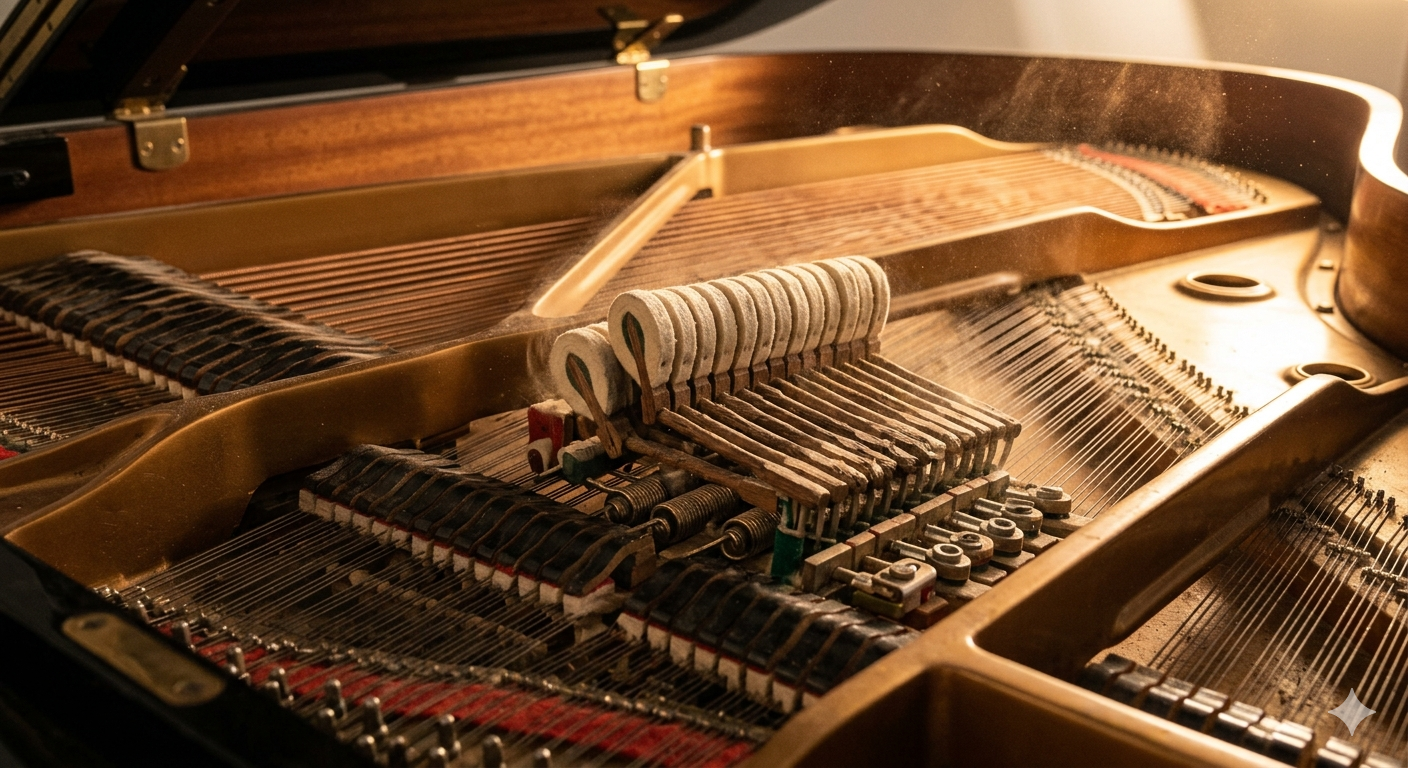

If you only know Franz Liszt as the rock-star virtuoso of the concert stage—the showman who notoriously broke piano strings with his pyrotechnic technique—get ready to meet his deepest, most fascinating, and mature side. The Années de pèlerinage (Years of Pilgrimage) are not just a collection of piano pieces; they are the ultimate musical travelogue. Divided into three magnificent volumes (“Switzerland,” “Italy,” and “Third Year”), this colossal masterpiece was written over several decades, logging the wanderings of a young artist with a bohemian soul who crossed Europe, absorbing the beauty of the world to transform it into pure sound.
The Années represent the very essence of Romanticism in its purest form. For today’s listener, this collection functions exactly like an immersive travel documentary or a high-definition photo essay. This is sophisticated, solar, and deeply atmospheric music, where the piano ceases to be a mere percussion instrument and transforms into a paintbrush capable of rendering mountain mist, the ripples of a lake, or the emotional impact of a Renaissance sculpture.
From Bucolic Switzerland to the Poetry of Florence
In the first year, dedicated to Switzerland, Liszt and his lover, the Countess Marie d’Agoult, flee the suffocating social scandals of Paris to find refuge among alpine lakes and peaks. The music here is deeply tátil and ecological. In evocative tracks like Au lac de Wallenstadt or Les cloches de Genève, you can practically hear the gentle lapping of the water against the shore and the distant echo of church bells floating through the crisp morning air.
By the second year, the journey arrives in Italy. But instead of focusing on nature, Liszt loses himself in culture. He draws inspiration from the paintings of Raphael, the sculptures of Michelangelo, and the epic poetry of Dante Alighieri. He proves that classical music doesn’t have to stay locked inside rigid academic formulas; it can dialogue directly with other art forms, creating a universe where every single chord evokes a visual image or a literary line. This was the true birth of impressionism on the keyboard, unfolding decades before Debussy or Ravel ever touched a piano.
The Crown Jewel: The Water Jets That Anticipated the Future
If you want to experience the most revolutionary, visually stunning moment of the entire collection without needing a manual of instructions, you must skip straight to the third volume and listen to Les jeux d’eaux à la Villa d’Este (The Fountains of the Villa d’Este).
Composed in Tivoli, near Rome, where Liszt spent his final years in spiritual retreat at a monastery, this piece is an absolute triumph of sensory and technical art. The pianist utilizes the highest register of the keyboard to create a shimmering wall of trills and rapid-fire notes that perfectly mimic the bubbling, spraying, and sparkling of sunlight catching the cascading water in the Villa’s legendary gardens.
The jaw-dropping element here is the sheer modernity of the sound. Liszt completely abandons traditional harmonic rules to create a fluid, glittering, almost liquid texture. There is no heavy structural baggage—there is only pure light. It is an acoustic knockout that targets your nervous system directly; you can almost feel the cool mist on your face as the music hovers in the air. This is virtuosity placed entirely at the service of pure, unadulterated beauty.
The Invitation
The Années de pèlerinage stand as the definitive testament of a man who lived life at maximum intensity—navigating everything from global pop idolatry to a quiet search for the divine—but who never stopped looking for the sublime in every corner of the Earth.
So, here is our invitation for your ritual tonight: set aside a quiet late afternoon, dim the distracting lights, and let Liszt’s piano map out your imagination. Seek out recordings by masters who know how to perfectly balance technical fire with poetic sensitivity, such as the legendary, monumental readings by Lazar Berman or the luxurious touch of Jorge Bolet. Close your eyes, open your heart, and travel the world without ever leaving your room. Feel the world through sound.