
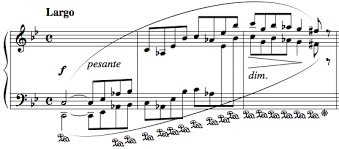
If Frédéric Chopin’s Nocturnes are the perfect soundtrack for secrets whispered in the dead of night, his Ballade No. 1 in G minor, Op. 23 is a full-length feature film of mystery, passion, and condensed drama packed into just over nine minutes. Forget any outdated notion that nineteenth-century piano music is polite or well-behaved. What Chopin did here was invent a completely new way of storytelling—without using a single word, relying solely on the raw electricity of eighty-eight keys.
The Ballade No. 1 is, without a doubt, one of the most cinematic and emotionally visceral works ever written. For the modern listener, it functions exactly like that gripping psychological thriller that grabs you by the collar in the very first frame and doesn’t let go until the credits roll, leaving you completely breathless in the dark.
Exile, Loneliness, and the Perfect Hook
Picture the scene: Chopin is in his early twenties, exiled in Vienna and then Paris, far from his beloved Poland, which is bleeding under Russian oppression. He is terribly alone, his health is fragile, and his heart is broken. Instead of writing a traditional lament, he decides to channel this piercing saudade—this bitter-sweet longing—into a narrative structure entirely new for the era, inspired by the epic poems of his homeland.
The piece opens with an aristocratic, sweeping introduction—a sort of call to arms that pulls back the velvet curtains of the mind. And then, the main theme emerges: a melancholic, hesitant melody that walks like someone lost in the foggy streets of winter Paris. It is the piece’s first great emotional hook. But Chopin’s true genius lies in the contrast. Just when you think you’ve mapped the music’s mood, it mutates. The sound gains weight, the tempo accelerates, and it overflows into a second theme of such solar, passionate lyricism that it feels like the memory of a summer love illuminating a gray afternoon.
The Crown Jewel: A Blind Flight Into the Abyss
If you want to understand why this piece is the terror of concert pianists and the ecstasy of audiophiles, look no further than the final two minutes—the legendary Coda (Presto con fuoco).
After meandering through moments of pure poetry and calm, the music undergoes a stunning transformation. The piano stops whispering and begins to roar. Chopin throws the listener into a tátil, high-octane whirlpool of ultra-fast notes, dissonant chords, and acrobatic leaps across the keyboard that feel like a high-speed chase. It is a blind, vertiginous, and intensely sexy flight straight into the abyss. When the final chord strikes, the sensation is that of someone who has just survived a perfect storm. It leaves your heart in your throat. You need no manual of instructions to be knocked out by this finale; it targets your nervous system directly.
The Invitation
The Ballade No. 1 was Chopin’s personal favorite among his own works (and was deeply adored by Robert Schumann). It earned a permanent spot in modern pop culture as the dramatic backbone of Roman Polanski’s film The Pianist, illustrating the sheer power of art to keep a human soul alive amid the ruins of war.
So, here is our invitation for your ritual tonight: wait for the sun to go down, dim the main lights, and pour yourself something smooth. Put on the Ballade No. 1—preferably the legendary, visceral interpretations of masters like Arthur Rubinstein or Krystian Zimerman—close your eyes, and let yourself be swept away by this screenplay of sound and fury. Open your heart and feel the impact.