
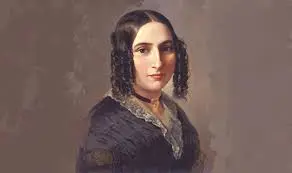
For a long time, the history of classical music looked like an exclusive, velvet-jacketed boys’ club. But if you roll back the curtain on the nineteenth century, you’ll find that one of its most brilliant, sophisticated, and innovative minds belonged to a woman. Her name was Fanny Mendelssohn, and she didn’t just write music—she ran the most vibrant, cutting-edge musical salon in Europe right from her own living room.
To understand Fanny’s vibe today, she was essentially the ultimate indie tastemaker. While her famous younger brother, Felix Mendelssohn, was traveling the world as a celebrity conductor, Fanny was the brilliant mastermind anchoring the Berlin cultural scene. She possessed a supernatural gift for melody—a gift so undeniable that even the rigid social rules of her time couldn’t keep her music from breaking through and capturing the imagination of anyone who heard it.
The Sunday Sessions that Shook Berlin
Picture Berlin in the 1830s and 40s. On any given Sunday, the place to be wasn’t a grand, stuffy concert hall; it was the Mendelssohn estate. Fanny organized and directed the Sonntagsmusiken (Sunday Music Sessions), intimate yet spectacular gatherings that attracted hundreds of intellectuals, poets, and musicians, including the likes of Franz Liszt.
Fanny was the heart, the brain, and the star of these sessions. She conducted a full choir and orchestra from the piano, showcasing her visceral, commanding technique.
Because her wealthy family believed it wasn’t “proper” for a woman of her social standing to publish music commercially, many of her early masterpieces were actually published under her brother Felix’s name to get them out into the world. In fact, Queen Victoria herself once famously serenaded Felix by singing her favorite song of his—only for Felix to blush and confess that the beautiful melody had actually been written by his sister Fanny.
The Crown Jewel: A Musical Diary of a Golden Italian Summer
If you want to experience Fanny Mendelssohn’s genius for blending cinematic storytelling with absolute keyboard virtuosity, look no further than her monumental piano cycle, Das Jahr (The Year). Written after a life-changing, sun-drenched trip to Italy, the piece acts as a musical diary, with a distinct movement for each month of the year.
There is a jaw-dropping moment in the movement titled “September” that perfectly captures her style. Subtitled “At the River,” the music features a continuous, shimmering waterfall of fast notes in the right hand that mimics the rushing, sparkling current of a river under the autumn sun, while a deep, melancholic melody sings underneath. It is sophisticated, tátil, and incredibly vivid. It doesn’t require a guidebook; it instantly transports you to a specific time and place, wrapping you in a blanket of pure acoustic atmosphere.
The Invitation
Fanny Mendelssohn left us tragically early in 1847 at the age of 41, passing away doing what she loved most—rehearsing a choir. But today, her manuscripts have finally been dusted off, revealing a treasure trove of over four hundred brilliant works that are bursting with life.
So, here is our invitation for your next afternoon wind-down: open the windows, let the natural light stream in, and put on Fanny Mendelssohn’s Das Jahr or her stunning String Quartet. Close your eyes and let yourself be carried away by the luminous, solar energy of a woman who refused to let the constraints of her era silence her soul. Open your heart and discover the music that Berlin’s elite fought for a seat to hear.