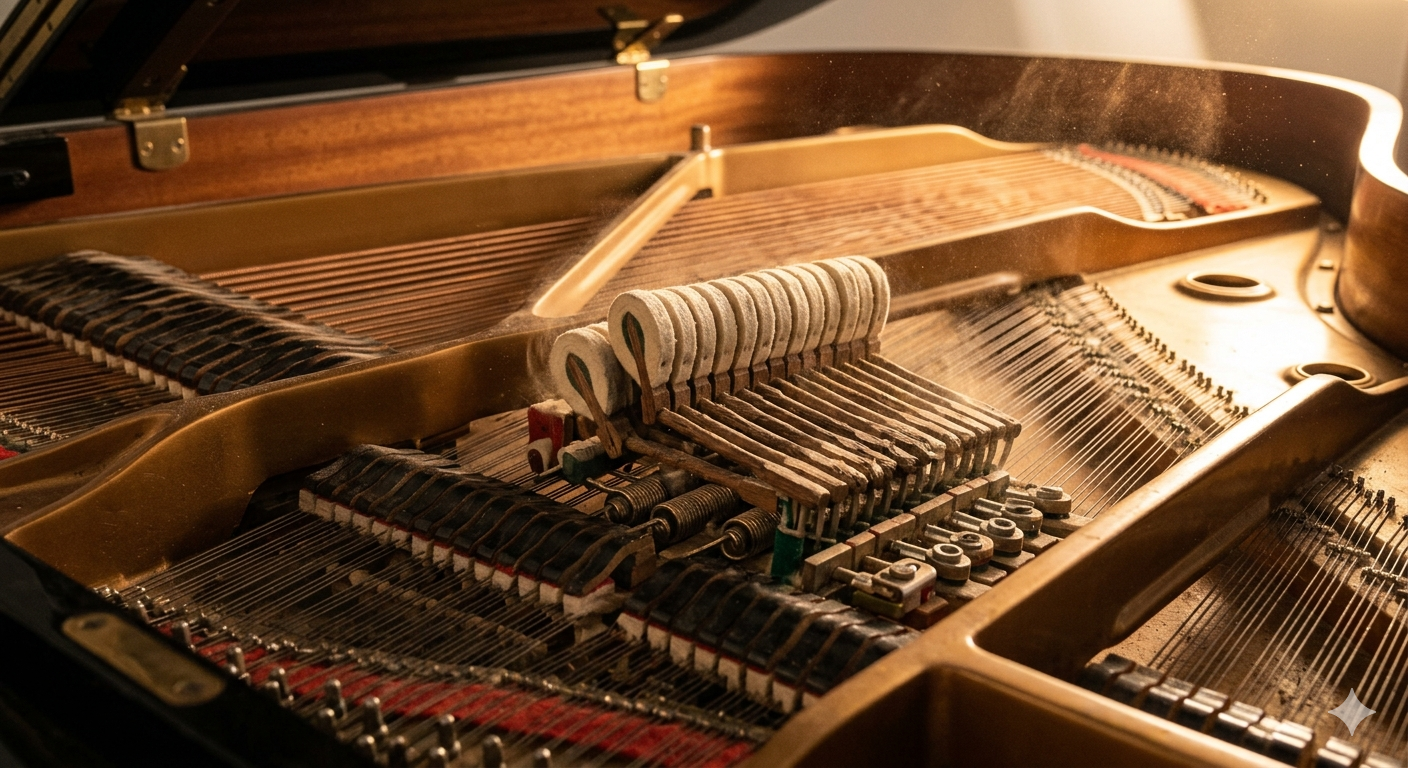
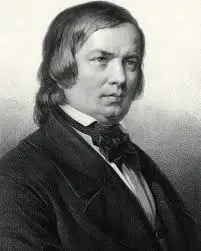
If Frédéric Chopin represented aristocratic elegance and Franz Liszt was the hurricane of the concert stage, Robert Schumann was the philosopher of the mind’s deepest mysteries. No other composer embodied the spirit of Romanticism with such raw intensity, beauty, and, ultimately, danger. Schumann did not merely write music to be casually appreciated; he utilized the eighty-eight keys of the piano as a private, secret diary—a mirror reflecting a psyche permanently torn between solar euphoria and the deepest, darkest melancholy.
To listen to Schumann today is the exact equivalent of stepping into a top-tier psychological thriller. His music is sophisticated, deeply tátil, and packed with emotional traps: one second you are floating within a fragile lullaby, and in the very next bar, you are hurled into a storm of crossed rhythms that defy gravity and conventional wisdom.
The Two Sides of the Coin: Florestan and Eusebius
To truly understand the electricity racing through Schumann’s scores, one must get to know the two characters he invented to sign his musical reviews and guide his compositions. He suffered from a severe mood disorder—what today would be diagnosed as bipolar disorder—and with astonishing lucidity, he gave names to his two internal forces.
On one side stood Florestan: the impetuous, daring, passionate, and irreverent romantic who attacked the piano with herculean force. On the other side was Eusebius: the introspective, melancholic dreamer who whispered melodies of an almost painful delicacy. Schumann’s music is the ultimate battleground between these two alter egos. They constantly interrupt each other, argue, and merge, creating a musical dynamic that targets the listener’s nervous system directly because it sounds exactly like our own minds on chaotic days.
The Crown Jewel: The Kaleidoscopic Whirlwind of Carnaval Op. 9
If you want to experience the absolute peak of Schumann’s genius without needing a manual of instructions, you must dive headfirst into his Carnaval Op. 9.
This collection of 21 short pieces is an authentic sonic masquerade ball. Schumann constructs musical miniatures to portray traditional characters from the Commedia dell’arte (like Harlequin and Columbine), pays homage to his contemporaries (including Chopin himself and the virtuoso violinist Paganini), and forces Florestan and Eusebius to dance in the exact same ballroom.
The jaw-dropping moment arrives in the final piece, Marche des Davidsbündler contre les Philistins (March of the League of David against the Philistines). Here, Schumann summons his imaginary league of ideal artists to wage a musical war against the “Philistines”—the critics and bourgeois audiences who preferred shallow, commercial music. The rhythm marches forward like a brilliant, solar, and absurdly energetic protest, where the piano roars to simulate an entire cultural revolution. This is virtuosity placed entirely at the service of a cause: the defense of pure art.
The Invitation
Schumann’s life was a razor-thin line walked between maximum poetic expression and the abyss—a journey that ended tragically in an asylum near Bonn in 1856, following his attempt to throw himself into the Rhine River. Yet, what remains etched into the sheet music is a testament of unparalleled emotional courage.
So, here is our invitation for your listening ritual tonight: wait for the house to fall completely silent, dim the main lights, and put on your finest pair of headphones. Drop the needle on Schumann’s piano works—ideally through the visceral, poetically unstable readings of masters like Martha Argerich, Vladimir Horowitz, or Sviatoslav Richter. Close your eyes, open your heart, and lose yourself in the labyrinth of this poet. Feel the impact of a soul stripped of all filters.