
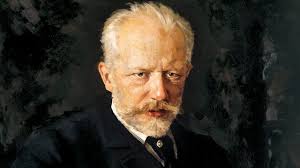
If you think classical music is an elite, exclusive club that requires a university degree to enjoy, you’ve clearly never listened to Pyotr Ilyich Tchaikovsky. Long before the modern music industry figured out the formula for a global chart-topper, this sensitive Russian giant was writing melodies with ganchos—hooks—so utterly irresistible that they have been living rent-free in the collective subconscious of humanity for over a century.
Tchaikovsky is, without a doubt, the master of pop drama before pop music even had a name. Whether you know it or not, you already know his music. It’s in the movies you watch, the holiday traditions you keep, and the cartoons you grew up with. He possessed a supernatural gift for capturing the grandest, most sweeping human emotions and condensing them into melodies that feel as natural and essential as breathing.
Tears, Triumph, and the Magic of the Ballet
Behind the glorious, cinematic brass sections and the lush, soaring strings was a man who lived his life on an emotional tightrope. Tchaikovsky’s life was a tempest of intense passion, deep melancholy, and a constant struggle with his own vulnerabilities in the rigid society of Tsarist Russia. But instead of letting the darkness consume him, he channeled that raw, unfiltered emotion straight onto the manuscript paper.
He took genres that the musical elite of his time looked down upon—like ballet music—and elevated them into high art. Before him, ballet music was just a timekeeper for dancers. Tchaikovsky turned it into a technicolor explosion of sound.
When you listen to The Nutcracker or Swan Lake, you aren’t just listening to a background score; you are stepping into a luminous, enchanted world. The famous theme of the Dance of the Sugar Plum Fairy, with its shimmering, bell-like celeste, is a masterclass in sonic branding. It’s sophisticated, fresh, and instantly recognizable—the 1890s equivalent of a viral summer hit.
The Crown Jewel: A Heart Shattered in Six Movements
If you want to experience Tchaikovsky at his most viscera and deeply moving, you must listen to his final masterpiece, the Symphony No. 6 in B minor, Op. 74, famously known as the Pathétique.
There is a jaw-dropping moment in the very first movement that defines his genius. After a period of dark, tense suspense, the orchestra suddenly throws open the floodgates and delivers a love theme so painfully beautiful, so expansive, that it feels like a warm embrace on a cold winter night. It is a melody that doesn’t just entertain you; it bypasses your intellect and targets your nervous system. It is grand, it is cinematic, and it is a pure, unfiltered expression of the human heart.
The Invitation
Tchaikovsky left us in 1893, just days after premiering his Pathétique, but the emotional highway he built between his soul and our ears remains wide open.
So, here is our invitation for today: dim the lights, put on your finest headphones, and let the sweeping romance of the Russian soul take over. Let yourself be carried away by a composer who wasn’t afraid to be vulnerable, who didn’t hide behind complex intellectual riddles, and who gave us some of the most beautiful, solar, and unforgettable melodies ever written. Open your heart and just listen.