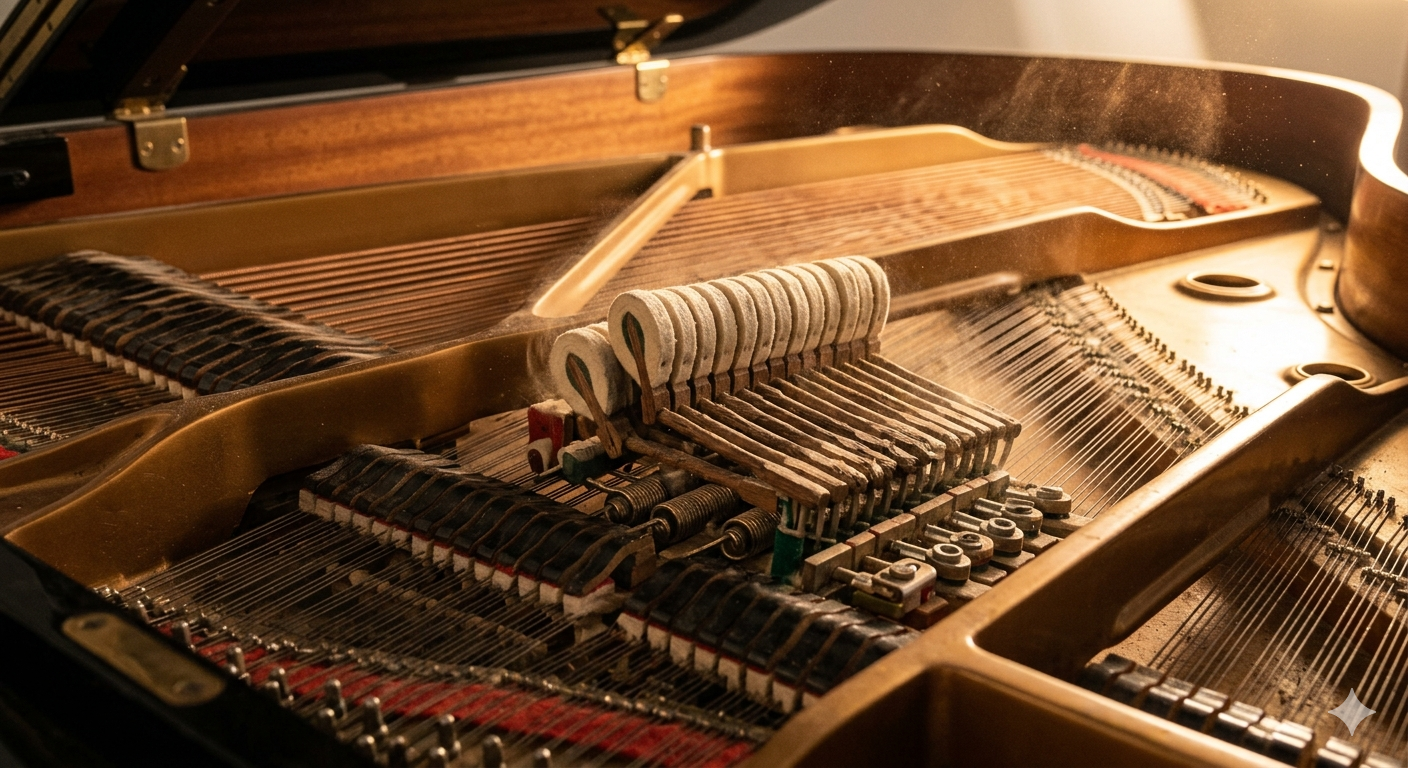
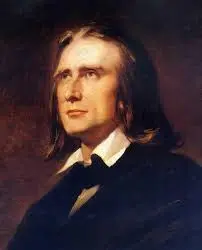
Long before stadiums shook to the sounds of electric guitars, and way before teenage fans fainted at the sight of Elvis or The Beatles, there was a single man, a piano, and a wave of pure hysteria that swept across Europe. His name was Franz Liszt, and in the 1840s, he didn’t just play classical music—he turned it into a high-octane, glamorous spectacle.
Before Liszt, pianists used to sit politely sideways at the instrument, looking like detached craftsmen. Liszt changed the game entirely. He was the one who decided to turn the piano sideways so the audience could see his dramatic profile, his long hair flying, and his hands blurring across the keys. He literally invented the solo piano recital as we know it today, transforming a classical concert into an aspirational, larger-than-life experience.
Lisztomania: Hysteria in White Gloves
To understand the sheer scale of Liszt’s celebrity, you have to look at a phenomenon that nineteenth-century critics actually dubbed “Lisztomania.” It wasn’t just admiration; it was absolute madness. Women would fight over his discarded cigar butts, tear at his velvet gloves for a souvenir, and literally faint in the aisles of concert halls when he hit a soaring crescendo.
But behind the showmanship and the rock-star charisma was a man of staggering, unmatched talent. Liszt possessed a physical technique that seemed almost supernatural—so much so that rumors circulated he had made a deal with the devil. Yet, his true genius lay in his ability to take the heavy, complex structures of the German tradition and infuse them with the fiery, improvisational soul of his Hungarian roots. He proved that music could be profoundly sophisticated while still packing the emotional punch of a stadium anthem.
The Crown Jewel: A Golden Evening by the Lake
If you want to experience the absolute peak of Liszt’s ability to blend jaw-dropping technique with pure, solar beauty, skip the chaotic showpieces and go straight to Liebestraum No. 3 (Dream of Love).
It features one of the most irresistible and famous melodies ever written for the piano. The piece begins as a tender, floating romance, but midway through, it builds into a spectacular, cascading waterfall of notes that feels like a heart overflowing with passion. It is sophisticated, deeply cinematic, and intensely emotional. It’s the kind of music that doesn’t need an explanation; it hooks you from the very first chord and refuses to let go.
The Invitation
Franz Liszt eventually walked away from the touring rock-star life to become a teacher (often giving lessons for free) and even took holy orders, but the electricity he brought to the stage changed live music forever. He broke the piano, rebuilt it, and showed us that classical music could be wild, free, and utterly exhilarating.
So, turn up the volume, leave your preconceptions at the door, and let yourself be swept away by the man who taught the world how to worship a performer. It’s an open invitation to experience classical music at its most thrilling and unapologetic.