
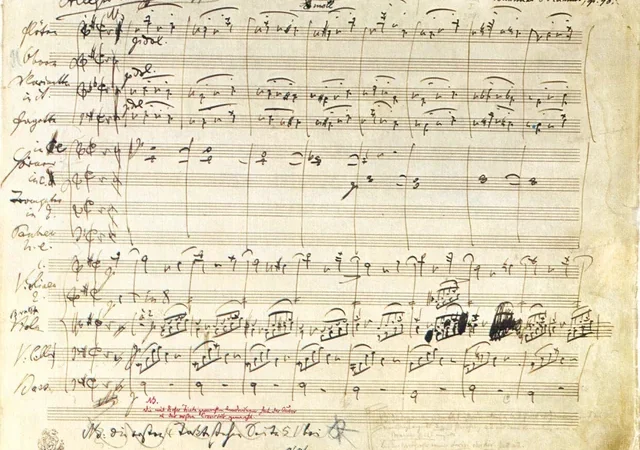
If Johannes Brahms’s Third Symphony was a warm, nostalgic sunset, his Symphony No. 4 in E minor, Op. 98 is the inevitable arrival of winter. It is autumn in its most mature, imposing, and ultimately devastating form. Written as the composer entered his fifties—looking back and contemplating the sheer weight of time—this piece is not just his final word on the symphonic genre; it is one of the most flawless, dark, and profoundly human sonic cathedrals ever erected.
The Fourth Symphony is the absolute peak of the “Brahms style.” For today’s listener, it doesn’t function like a shallow melodrama relies on cheap effects; it possesses the depth and visceral impact of a classic Greek tragedy or a sweeping cinematic epic about fate. The music is sophisticated and deeply tátil, where every single note seems to carry the burden of a lifetime of unspoken loves, guarded secrets, and a heroic resignation in the face of the end.
Autumnal Sighs and the Rigor of a Wizard
The piece begins without an introduction, without warning. The strings simply drift in with a melody that feels like a long, deep sigh—two notes rising, two notes falling, like autumn leaves cascading slowly to the earth. It is a melodic hook of aristocratic and heartbreaking lyricism.
Yet behind this deceptive, melancholic simplicity hides the mind of an obsessive engineer. Brahms was a master at looking backward—channeling the intricate polyphony of Bach and the structural rigor of Beethoven—and weaving that ancient architecture directly into the beating heart of the late nineteenth century. He didn’t need to scream to be heard; he built subterranean tensions where the rhythm constantly battles against itself, creating a heavy layer of static electricity that builds in the room until the air becomes almost too thick to breathe.
The Crown Jewel: The Fiery Labyrinth of the Grand Finale
If you want to witness the most stunning, jaw-dropping moment of Brahms’s entire career—the exact movement that makes critics hold their breath and audiophiles push their sound systems to the absolute limit—you must skip straight to the fourth and final movement (Allegro energico e passionato).
Here, Brahms takes an incredibly bold artistic gamble. He decides to close his final symphony using a Baroque structure called a passacaglia—an ancient technique built upon repeating a bassline of just eight notes over and over again while everything else mutates around it. Brahms constructs thirty-two magnificent variations on top of this brief theme, turning the finale into a thrilling labyrinth of sound and fury.
The moment that leaves you completely floored happens in the seamless transition between these variations. The music passes through a solitary, agonizing flute solo, gathers a warm, almost religious reverence from the trombones, and then suddenly explodes into a whirlwind of blind fury. The strings roar, the brass strike the chords with the finality of a courtroom verdict, and the rhythm marches forward like the implacable gears of fate. Defying the standard conventions of his era, which demanded triumphant, happy endings, Brahms buries the symphony in a monumental, solar darkness. It leaves your heart in your throat—a technical knockout that targets your nervous system and requires zero manual of instructions.
The Invitation
The Fourth Symphony premiered in 1885 under Brahms’s own baton, initially leaving the audience in a stunned, silent shock before erupting into a roaring ovation. It was the public realizing they had just witnessed the closing chapter of an entire era of romantic music.
So, here is our invitation for your ritual tonight: wait for the night to cool down, dim the lights, and let Brahms’s Fourth take over the room. If you can, seek out the visceral, hyper-detailed reading by Carlos Kleiber (conducting the very same Vienna Philharmonic from his legendary Beethoven masterwork) or the dense, luxurious warmth of Herbert von Karajan. Close your eyes, open your heart, and let yourself be swept away by this beautiful autumn storm. Feel the impact.