
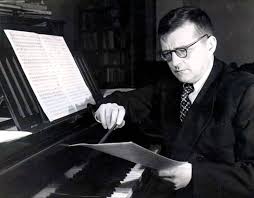
If the history of twentieth-century music preserved a definitive testament where dark sarcasm and existential tragedy fused into an architecture of whispers and violent explosions, that testament is Dmitri Shostakovich’s Symphony No. 15 in A Major, Op. 141. Written in 1971 under the heavy shadow of failing health and looming mortality, his final symphony is no predictable Romantic lament. It is a psychological game of mirrors—a high-definition technical knockout where the composer operates as a ghostly master of puppets. By aggressively weaving absurd musical quotations from Rossini’s William Tell and Wagner’s Ring cycle alongside brittle dodecaphonic lines and skeletal percussion, Shostakovich sculpted a masterpiece that floats precariously between the innocence of a midnight toy shop and the raw, tactile chill of a Soviet morgue.
To listen to this masterpiece today with a high-definition pair of headphones is an experience in pure cinematic suspense. Shostakovich willingly relinquishes the dense, opulent orchestral masses of his past to carve out a surgical transparency, where every single isolated note carries the crushing weight of a lifetime spent surviving.
The Toy Shop and the Labyrinth of Memory
The opening movement crawls to life with the delicate, crystalline texture of a mechanical glockenspiel. The composer himself famously described this atmosphere as a “toy shop,” but beneath the surface of this apparent weightlessness lurks an imminent, claustrophobic danger. The writing is lean, dry, and delivered with the sharp, slashing accent that defines Shostakovich’s finest pages.
The ultimate structural knockout occurs when the famous, galloping fanfare from Rossini’s William Tell abruptly bursts out of nowhere through the brass section. This is no affectionate homage or amateur pastiche; it is an acid-washed irony, a hysterical laugh in the face of the absurd. The stark contrast between the rigid, mechanical drive of the orchestra and the sudden intrusion of this musical memory generates a unique tactile voltage, instantly morphing a playful landscape into suffocating paranoia. This is the virtuosity of the grotesque under absolute, meticulous control.
The Crown Jewel: The Cello’s Grief and the Ticking of Death
If you want to experience the authentic voltage and surgical impact of this symphony without needing a roadmap, your mandatory turning points reside within the bleak Adagio (Second Movement) and the chilling percussive clockwork at the tail end of the finale.
The jaw-dropping element in the Adagio belongs entirely to the mournful solo cello, emerging right after a dark, solemn chorale from the brass. The sound demands an extraordinary tactile rawness: you can distinctly hear the physical rasp of horsehair biting into the metal strings, drafting a lonely, desolate prayer within a completely hollow acoustic space. When the orchestra inevitably explodes into a massive, Passacaglia-style climax of sheer grief, the sound gains a muscular weight that strikes the listener directly in the chest before collapsing back into sepulchral silence.
Then, at the very end of the symphony, Shostakovich delivers his absolute masterstroke. Suspended over a single, unyielding note in the violins that feels like a fraying thread of life, the percussion section—castanets, woodblocks, triangle, and snare drum—creeps in to execute a mechanical ostinato. This is the sound of a marching skeleton, the relentless, cold ticking of a biological clock winding down. The pristine articulation of these small wooden and metallic pieces cutting through the studio’s silence is devastating. This is death sketched entirely without melodrama—only the raw, physical reality of matter.
The Invitation
Dmitri Shostakovich demonstrates to us in his fifteenth symphony that a final farewell to life requires no grand, heroic speeches. He proved that mystery, mockery, and the quietest whisper are incredibly potent weapons to challenge time and oblivion.
So, here is our invitation for your ritual tonight: isolate yourself entirely from the noisy static and frantic rush of the world, slip on your finest pair of headphones, and press play on this monument of sonic haunting. Seek out interpretations that fundamentally master the millimeter precision and venom of this score—such as the historic premiere recording conducted by the composer’s son, Maxim Shostakovich, with the Moscow Radio and Television Symphony Orchestra, or the biting, sharp reading by Bernard Haitink leading the London Philharmonic Orchestra. Close your eyes, shift your perception, and let Shostakovich’s ghosts and mechanical clocks entirely redraw the landscape of your mind.