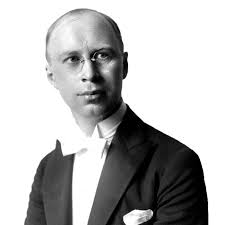
If the history of twentieth-century music had to point to a single, relentless sound engineer who took traditional lyricism and armored it with steel plates, mechanical drive, and a high-voltage acid irony, that name would be Sergei Prokofiev. Absolute master of conciseness and geometric clarity, the composer transformed his famous orchestral and piano suites into genuine arenas for psychological suspense and physical dynamism. Prokofiev operated at a unique electrical voltage: his scores completely reject vague sentimentalism to embrace a lean, athletic style of writing where every single note executes a surgical structural function. His suites are not merely collections of dances; they are high-definition technical knockouts where aggressive rhythm and the purest melodic beauty collide without an apology.
To listen to Prokofiev’s suites today with a high-fidelity pair of headphones is an astonishingly tactile experience. It means feeling the heavy weight of metal in the low frequencies, the slashing sharpness of the woodwinds, and the feverish pulse of a rhythmic machine that drives forward, destroying every cliché in its path.
The Rhythmic Engine and the Razor of Irony
Prokofiev fundamentally understood both the orchestra and the piano as monumental percussion instruments. Within his suites, he establishes an aesthetic game of chess where sweetness and sarcasm alternate with cinematic speed. His famous “motor vein”—the implacable rhythmic pulse—creates a physical traction that drags the listener through transparent textures completely stripped of harmonic fat.
Whether mocking aristocratic pomp with unexpected modulations or sketching the most poignant lyricism under a cold, geometric light, Prokofiev manipulates the listener’s expectations with surgical precision. There is zero room for boredom: the music bites, scratches, and delivers a tactile vividness where sound gains a genuinely three-dimensional contour.
The Crown Jewels: The Weight of Romeo and Juliet and the Sarcasm of Lieutenant Kijé
If you want to experience the authentic voltage and raw physical grit of this genius without an instruction manual, your mandatory turning points reside within the tectonic impact of the Dance of the Knights (Romeo and Juliet Suite No. 2) and the surgical precision of the Troika (Lieutenant Kijé Suite).
The jaw-dropping moment in the Dance of the Knights stands as one of the most brutal knockouts in music history. The movement cuts open with a dense, dissonant wall of brass that resolves into a heavy, crushing ostinato driven by the low strings and percussion. The acoustic articulation here demands absurd tactile definition: you can feel the physical impact of every single note as if iron were colliding with the floorboards. The rhythm drives forward with the sheer arrogance of military armor, creating a claustrophobic and monumental environment that hits the listener straight in the chest, only to immediately give way to a floating, dark melody that crawls right under your skin.
Conversely, in the Lieutenant Kijé Suite, Prokofiev distills his finest satirical venom. In the Troika movement, the music mimics the rapid pace of a winter sled ride across the snow, but does so with a slashing, highly percussive accent. The brilliant integration of the tenor saxophone combined with sharp pizzicato string snaps and the bright jingle of sleigh bells creates a high-definition sonic mass that demands millimeter-precise attack. The playfulness here is entirely cynical—a mechanical celebration where the absolute transparency of the studio layout reveals the genius of a flawless orchestral sound design.
The Invitation
Sergei Prokofiev demonstrated to the world that modernity does not need to abandon melody to be revolutionary; it simply requires muscle, brio, and an indomitable courage to challenge the obvious. He transformed rhythm into the absolute backbone of a new era.
So, here is our invitation for your ritual tonight: isolate yourself entirely from the noisy static and frantic rush of the world, slip on your finest pair of headphones, and press play on these sonic gears. Seek out interpretations that fundamentally master the tactile equilibrium and sharp brio of this writing—such as the historic, fiery readings by Valery Gergiev leading the Kirov Theatre Orchestra, the surgical fire of Claudio Abbado with the Berlin Philharmonic, or the monumental weight delivered by Yuri Temirkanov helming the St. Petersburg Philharmonic. Close your eyes, absorb the relentless pulse of the steel, and let Prokofiev’s suites entirely organize the chaos of your day.