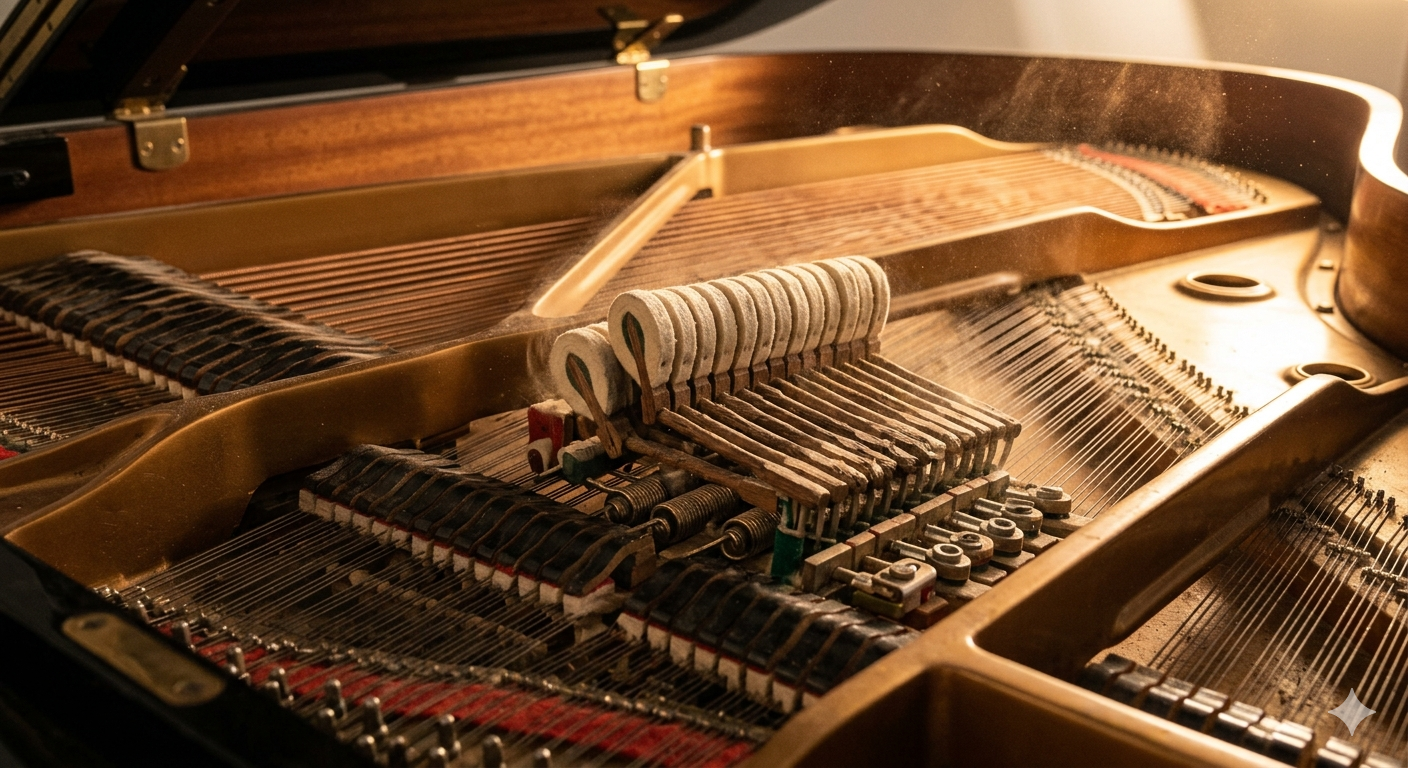
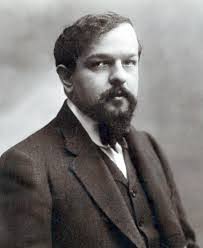
If the history of Western music had to pinpoint the exact moment when sound stopped being a straight line and became a floating atmosphere, that moment would bear the name of Claude Debussy. While the nineteenth-century German titans were building heavy sonic cathedrals packed with complex academic theories and Herculean dramas, this rebellious Frenchman looked at the piano and decided to do something far more dangerous: he chose to capture the wind, the reflection of light on water, the texture of morning mist, and the profound mystery of dreams. Debussy didn’t want his music to tell a story with a rigid beginning, middle, and end; he wanted it to inflict an immediate, tátil sensation straight upon the listener’s nervous system.
To listen to Debussy today is an intensely sensory and solar experience. He completely imploded the laws of traditional harmony—the ones that dictated exactly which chords were allowed or forbidden to walk together—and proved that sound possesses color, weight, and a fluid, shape-shifting electricity. He didn’t forge music for conservatory textbook manuals; he created it for the skin.
The Subtle Transgressor and the Revolution of Unchained Chords
Debussy utterly loathed the “Impressionist” label that critics tirelessly tried to pin on him. Instead, he viewed himself as a creator of alternative realities engineered through sound. When he was a student and his conservative professors demanded to know what structural rule he was following when playing those strange, hauntingly beautiful harmonies on the piano, he replied with the raw audacity of true genius: “My own pleasure.”
His masterstroke was liberating chords from their mandatory, textbook resolutions. In Debussy’s musical universe, notes float like clouds across a vast sky, changing color with no urgent rush to arrive anywhere at all. One of his most emblematic works, Prélude à l’Après-midi d’un Faune (Prelude to the Afternoon of a Faun), written in 1894, opens with a solo flute melody so winding, sensual, and completely free of gravity that, for many music historians, it marks the definitive birth of modern music.
The Crown Jewel: The Hypnotic Knockout of La Mer
However, if you want to experience the true orchestral muscle and tátil virtuosity of Debussy without needing any guide or storyline, your mandatory destination is La Mer (The Sea), three symphonic sketches composed between 1903 and 1905.
Interestingly, Debussy composed a significant portion of this masterpiece far away from the coast, drawing instead upon deep-seated memories and the intense visual impact the ocean had always left on his imagination. The result is not a literal, predictable description of crashing waves, but rather the technical knockout of a raw force of nature translated directly into acoustic voltage.
The jaw-dropping moment strikes in the second movement, “Jeux de Vagues” (Play of the Waves). Here, the orchestra morphs into a living, multicolored organism. Harps and cymbals create shimmering textures that mimic ocean spray, the woodwinds unleash rapid, sudden gusts of wind, and the string sections move in massive, sweeping blocks, delivering the exact physical sensation of floating. It is a cinematic construction in breathtaking high definition, where the music boils with an energy that is simultaneously solar and deeply mysterious. You don’t merely listen to a piece about the sea; you are entirely swallowed by it.
The Invitation
Debussy taught us that the silence between the notes is just as vital as the sound itself, and that the deepest beauty lives within that which cannot be touched, only perceived. He completely cleansed the world’s ears and paved the way for everything that followed—from modern jazz to the most spacious, atmospheric film scores of contemporary cinema.
So, here is our invitation for your ritual tonight: wait for the daily rush to quiet down, kill the main lights in the room, and slip on your finest pair of headphones. Press play on La Mer or his celebrated piano works, such as Clair de Lune. Seek out interpretations that masterfully grasp the fluid fluidity and magic of this sound, such as the legendary recordings of Pierre Boulez conducting with the precision of a surgeon, the hypnotic atmosphere of Claudio Abbado, or the tátil, poetic genius of Arturo Benedetti Michelangeli at the keys. Close your eyes, open your perception, and feel the massive impact of this sonic ocean. Let yourself float away.