
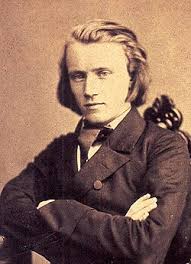
If the history of nineteenth-century Romanticism had to point to a single, surgical master who refused to dissolve music into vague sentimentalism or empty pyrotechnics, that name would be Johannes Brahms. While his contemporaries expanded orchestras to their absolute limits and chased literary programs, Brahms did the exact opposite: he took the most rigid classical forms—the symphony, the sonata, the variations—and injected them with an incandescent, high-voltage emotional torrent. Brahms operated at a unique frequency. His writing completely rejects harmonic fat and superficial ornament to embrace a lean, dense, and deeply telluric musculature. He proves that true romantic passion is not born from a lack of control, but from the absolute compression of energy within a structure of steel.
To listen to Brahms today with a high-fidelity pair of headphones is an astonishingly tactile experience. It means feeling the immense weight of the double basses and cellos anchoring the sound, the slashing rasp of the horns, and the transparency of a polyphony where every single line moves with overwhelming physical traction.
The Weaver of Frequencies and the Geometry of Emotion
Brahms was an acoustic engineer obsessed with the balance of forces. His famous piano and orchestral writing defies traditional textbooks by favoring the middle and lower registers, creating a dark, velvety wall of sound packed with brutal physical presence. What many critics of his era mistakenly labeled as “heavy” was, in fact, high definition: sound with muscle, bone, and brio.
The true genius of Brahms resides within the psychological suspense he constructs through rhythm. His constant use of polyrhythms—two notes against three, violent syncopations that displace the musical pulse—places the listener in a permanent state of tension. There are no easy melodies floating smoothly here; there are wide, thick melodic lines that scratch at harmonic stability, demanding a razor-sharp attack and relentless physical voltage from the performers.
The Crown Jewels: The Tectonic Punch of the First Symphony and the Trance of the Second Piano Concerto
If you want to experience the authentic voltage and tactile rawness of this titan without an instruction manual, your mandatory turning points reside within the monumental impact of the First Movement of the Symphony No. 1 in C Minor and the feverish attack of the Allegro appassionato from the Piano Concerto No. 2 in B-flat Major.
The jaw-dropping moment at the opening of the First Symphony—rightly nicknamed “Beethoven’s Tenth”—stands as one of the most brutal beginnings in all of music history. The work cuts open with a crushing ostinato in the timpani, beating like an iron heart through the studio space, while the strings ascend in a chromatic line of suffocating grief and the winds scream long, tense notes. The acoustic articulation here must be surgical: you can feel the massive physical displacement of air in the low frequencies and the immense buildup of tension with every single stroke of the timpani. It is a three-dimensional sonic mass that drives forward without allowing a gasp of air, delivering a definitive impact straight to the chest.
Conversely, the polar opposite of physical virtuosity hits during the second movement of the Piano Concerto No. 2. Brahms ironically referred to this movement as “a very small scherzando,” but what he actually delivers is a storm of apocalyptic proportions. The piano unleashes heavy, percussive blocks of chords at blistering speed, colliding head-on with an orchestra that fractures the floorboards with dense, dissonant walls of sound. The friction of the strings and the sheer aggressiveness of the pianist’s attacks demand absolute brio: this is matter in a state of trance, proving that the Brahmsian piano is an extension of metal and wood engineered to bite hard.
The Invitation
Johannes Brahms demonstrated to the world that Romanticism did not need to tear up the textbooks of the past to be revolutionary; it simply required an indomitable courage to lay your own soul right on the knife’s edge and squeeze it into the perfect form. He transformed structural density into the absolute backbone of his immortality.
So, here is our invitation for your ritual tonight: clear your mind of the noisy static and frantic rush of everyday life, slip on your finest pair of headphones, and press play on this monument of emotional architecture. Seek out interpretations that fundamentally master the tactile equilibrium and sharp brio of this score—such as the historic, fiery readings by Wilhelm Furtwängler or the surgical precision of Herbert von Karajan leading the Berlin Philharmonic in the symphonies, or the raw, visceral fire delivered by Emil Gilels with Eugen Jochum in the second piano concerto. Close your eyes, absorb the electricity of these dark colors, and let Brahms’s indomitable engineering entirely redraw the landscape of your day.