
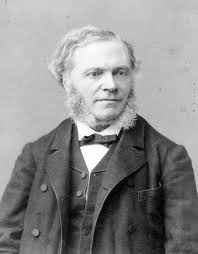
If the history of nineteenth-century music preserved a silent master who took the classical tradition and stretched it to the absolute limits of an overwhelming physical and spiritual density, that architect was César Franck. Hidden behind the massive stone walls of the Basilica of Sainte-Clotilde in Paris, the Belgian-born French composer did not write music for parlor ornament or casual distraction: he operated at a unique electrical voltage. By fusing harmonic clarity with a technique of continuous, chromatic modulation that seemed to shift the very floorboards beneath the listener’s feet, Franck transformed both the orchestra and the pipe organ into living, high-definition organisms. His writing is characterized by a lean, agile musculature, where the raw tactile edge of the attacks and the sheer monumentality of the sonic masses unite to deliver a relentless, profound impact.
To listen to César Franck today with a high-fidelity pair of headphones is to understand that mysticism does not require soft, ethereal contours. On the contrary, his music demands physical presence—a surgical dynamic response that bites into the low frequencies and makes the chest vibrate with the pure weight of sound.
Cyclic Form and the Geometry of Emotion
Franck’s definitive signature in composition engineering was his obsessive use of the “cyclic form”—a technique where a small thematic core, a brief melodic cell, travels throughout the entire work, mutating and reappearing across different movements in completely new harmonic clothing. There is zero fat or structural waste in his large-scale designs; a rigorous geometry binds every single measure together.
Yet, this mathematical precision never suffocates the sharp brio of his pen. Franck drives the music forward through constant modulations that generate a feverish sense of cinematic suspense and motion. His melodic lines scratch at traditional tonal stability, delivering a tactile vividness where sound gains an almost three-dimensional depth and weight.
The Crown Jewels: The Tectonic Weight of the Symphony in D Minor and the Attack of the Violin Sonata
If you want to experience the authentic voltage and physical force of this sonic engineering without an instruction manual, your mandatory turning points reside within the monumental impact of the First Movement of the Symphony in D Minor and the indomitable brio of the Allegro from the Violin Sonata in A Major.
The jaw-dropping moment at the opening of the Symphony in D Minor stands as one of the most brutal demonstrations of dynamic contrast in all of late Romanticism. The work cuts open with a Lento motif—a dark, claustrophobic whisper in the low strings crawling through the studio space. But the genuine punch to the gut strikes immediately after in the Allegro non troppo: the entire orchestra collides in a dry, heavy attack, where the brass and timpani construct a massive wall of sound that slices through the silence with military precision. The acoustic articulation here must be surgical: you can feel the physical displacement of air in the bass frequencies and the immense tension stored within every transition—a definitive sonic impact.
On the polar opposite end of tactile execution sits his famous Violin Sonata. In the second movement (Allegro), the piano unleashes a high-speed whirlwind of notes, laying down a feverish, mechanical bedrock over which the violin cuts right through with a slashing aggressiveness. This requires absolute brio from the performers right at the tip of the bow. There is no room for hesitation: the physical friction of horsehair against the metal strings and the percussive attack of the piano keys deliver a transparent sonic mass packed with muscle and electricity, proving that chamber music can bite just as hard as a full orchestra.
The Invitation
César Franck demonstrated to the world that monumentality does not depend on an excess of elements, but rather on the sheer depth with which every sonic force is orchestrated. He took the heavy weight of the sacred and translated it into the universal language of energy and dynamic contrast.
So, here is our invitation for your ritual tonight: isolate yourself entirely from the frantic noise and static of everyday life, slip on your finest pair of headphones, and press play on these colossal structures. Seek out interpretations that master the tactile equilibrium and structural weight of this writing—such as the legendary, definitive readings by Pierre Monteux leading the Boston Symphony Orchestra, or the raw, visceral virtuosity of Martha Argerich and Gidon Kremer in the violin sonata. Close your eyes, absorb the impact of these infinite modulations, and let Franck’s indomitable architecture entirely redraw the landscape of your mind.