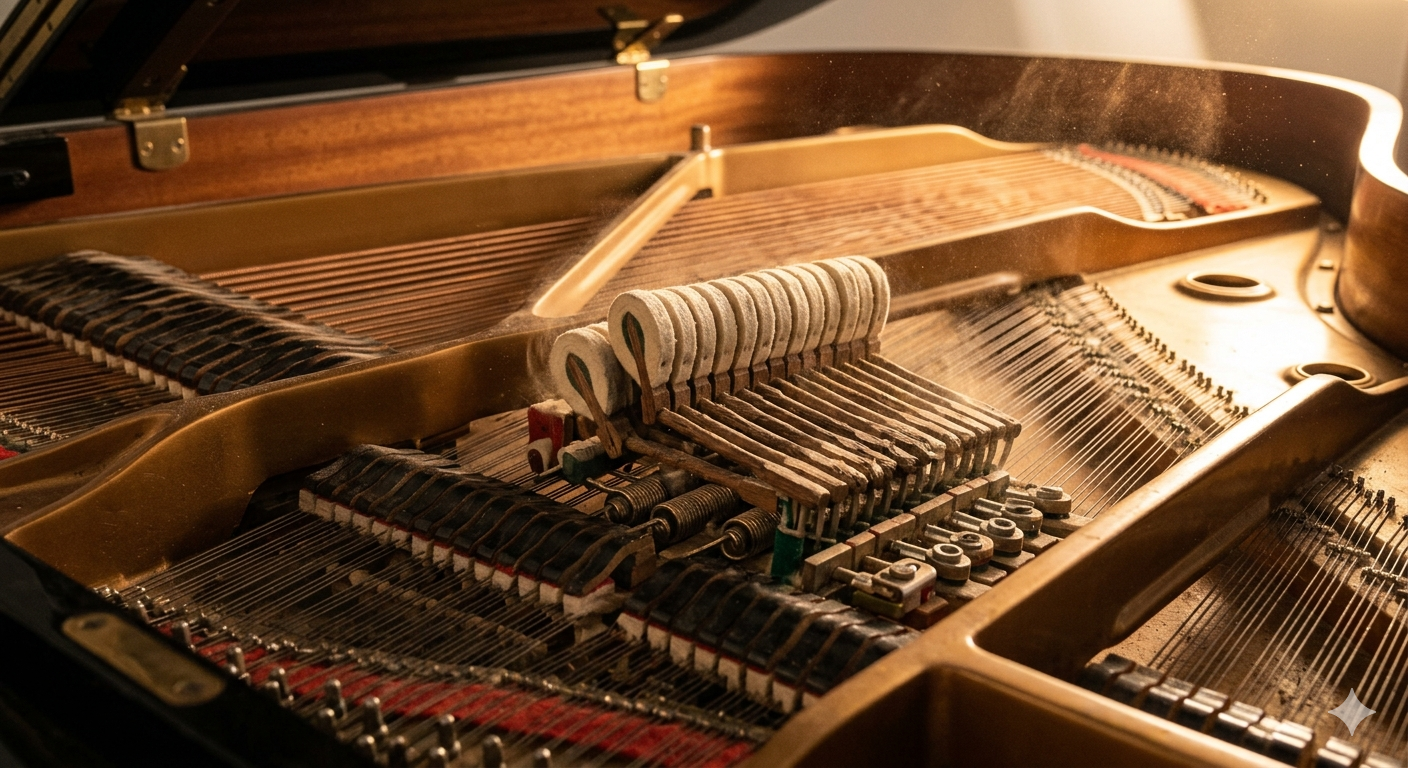
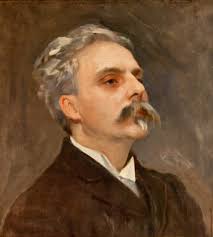
If the history of Western music boasts composers who operate like erupting volcanoes, there is one Frenchman who conquered eternity through the absolute power of a whisper. His name was Gabriel Fauré. While the cultural world around him was fractured by the massive, heavy dramatic weight of Wagnerism and the bright, vivid color revolutions of Debussy, Fauré sculpted a completely unique creative path founded on restraint, refinement, and an aristocratic sensibility. His music never attempts to overpower the listener through sheer exhaustion or an assault of decibels; it prefers to seduce the nervous system via winding melodic lines and harmonic modulations that shift color like fine silk under a changing light.
To listen to Fauré today is an intensely intimate and tátil experience. It is a solar aesthetic, but one belonging to a late-afternoon, autumnal sun, where every single note carries the weight of a dignified nostalgia and a sweetness that cuts straight to the core of the soul.
The Hidden Master and the Quiet Revolution
Fauré spent a major portion of his life working as a church organist in the historic parishes of Paris and, later, as the director of the prestigious Paris Conservatoire (where he served as a mentor to brilliant minds like Maurice Ravel). Behind his polished demeanor and natural elegance, however, lived a subtle revolutionary. He took the rigid, academic rules of classical harmony and, with the very tips of his fingers, loosened the knots.
In Fauré’s hands, music flows without abrupt jolts. He completely mastered the art of connecting distant, unrelated chords with such a staggering natural fluidity that you only realize you have been transported to an entirely new key once you are already deeply immersed in it. His songs for voice and piano (the famous mélodies) and his chamber music are gems cut in stunning high definition, where the true luxury resides in the absolute absence of any superfluous notes.
The Crown Jewel: The Transcendental Knockout of the Requiem
If you want to experience the true essence and psychological depth of Fauré’s genius without needing an instruction manual or a formal script, your mandatory starting point is his Requiem in D minor, Op. 48, composed between 1887 and 1890.
While most nineteenth-century composers utilized the traditional mass for the dead to paint apocalyptic, terrifying scenes of judgment day, thunderous wrath, and eternal fire, Fauré did the exact opposite. He famously defined his masterpiece as “a lullaby of death.” For him, the end of physical life was not a painful punishment, but rather a peaceful release, a joyful aspiration toward a happiness beyond.
The jaw-dropping moment arrives during the final movement, “In Paradisum.” The pipe organ and harps trace a continuous, tátil, and floating texture of gentle triplets, while a choir of soaring voices enters with a melody of celestial, almost ethereal purity. It is a technical knockout delivered entirely through weightlessness. The music floats completely free of gravity, clearing any lingering tension from the listener’s mind and offering a consolation of such profound beauty that it is impossible to experience it without feeling your defenses drop.
The Invitation
Gabriel Fauré demonstrated to us that the most devastating power in art frequently belongs to discretion. He proved that pure emotion requires no intellectual pretense, sentimental excess, or grand fanfare to completely transform an environment.
So, here is our invitation for your ritual tonight: choose a moment when the rush of the world outside slows down, slip on your absolute finest pair of headphones, and press play on the Requiem or his hypnotic Pavane, Op. 50. Seek out readings that masterfully grasp the inherent nobility and transparency of this music, such as the legendary recordings of Michel Corboz, the balanced clarity of the Orchestre de Paris, or the exquisite chamber interpretations by the Ébène Quartet. Close your eyes, take a deep breath, and feel the subtle impact of this magnificent architecture of silk. Let the sound embrace the close of your day.