
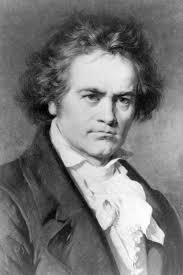
If the global history of classical music possesses a definitive watershed that took classical formalism and fused it with an overwhelming physical voltage, that landmark is Ludwig van Beethoven. Writing at the dawn of the 19th century, the titan of Bonn did not create music to adorn aristocratic parlors; he operated as a relentless sound engineer. By establishing a lean, agile style of writing completely stripped of unnecessary harmonic fat and packed with a violent rhythmic brio, Beethoven transformed the orchestra into a high-definition organism. His scores demand a surgical dynamic response that bites into the low frequencies, challenging the finest audio systems in the world to translate the massive weight of his sonic blocks.
To listen to Beethoven today with a high-fidelity pair of headphones is an astonishingly tactile experience. It means feeling the dry, heavy punch of the orchestral attacks and the permanent traction of an engine driving forward, destroying every acoustic cliché in its path.
The Rhythmic Engine and the Compression of Energy
Beethoven’s definitive signature in composition architecture was his extreme economy of material, weaponized to create intense psychological suspense. He did not rely on long, winding melodies to fill the acoustic space; instead, he took brief motifs—rhythmic cells of just a few notes—and compressed them within a rigorous geometry that binds every single measure together.
This mathematical precision is precisely what drives the physical traction of his work. Through violent syncopations and unexpected dynamic accents that displace the musical pulse, Beethoven places the listener in a permanent state of tension. There is zero room for boredom: his melodic lines scratch at traditional tonal stability, delivering a three-dimensional vividness where sound gains an iron contour.
The Crown Jewel: The Tectonic Impact of the Fifth Symphony
If you want to experience the authentic tactile rawness and high voltage of this genius without an instruction manual, your mandatory turning point resides within the acoustic punch of the First Movement of the Symphony No. 5 in C Minor, Op. 67.
The opening motif of the Fifth Symphony stands as one of the most famous technical knockouts in music history, but listening to it in high definition reveals the true crueza of Beethoven’s engineering. Those iconic four notes are not just a hymn to fate; they are a dry, heavy attack delivered by the strings and clarinets in unison. The acoustic articulation here must be surgical: you can feel the rustic friction of horsehair against the metal strings and the massive displacement of air in the low frequencies fracturing the silence of the studio. When the full orchestra collides immediately after, the massive wall of sound cuts through the mix with military precision. It is a sonic mass that hits the listener straight in the chest, proving that classical muscle can bite with absolute brio.
The Invitation
Ludwig van Beethoven demonstrated to the world that modernity is born from the indomitable courage to stretch the limits of the ensemble. He transformed dynamic contrast into the absolute backbone of his immortality.
So, here is our invitation for your ritual tonight: isolate yourself entirely from the frantic noise and static of everyday life, slip on your finest pair of headphones, and press play on these sonic gears. Seek out interpretations that fundamentally master the tactile equilibrium and overwhelming structural weight of this score—such as the fiery, surgical reading by Carlos Kleiber leading the Vienna Philharmonic, the monumental electricity delivered by Herbert von Karajan fronting the Berlin Philharmonic (1963 recording), or the raw historical brio of John Eliot Gardiner helming the Orchestre Révolutionnaire et Romantique. Close your eyes, absorb the relentless pulse of the steel, and let Beethoven’s engineering entirely organize the chaos of your day.