
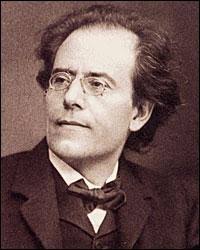
If the global history of classical music possesses an architect who took the foundations of the 19th century and pushed them to the absolute limit of acoustic saturation and existential vertigo, that name is Gustav Mahler. Operating at the dawn of the 20th century, the Austrian master deconstructed the traditional orchestra to mutate it into a high-fidelity machine of colossal proportions. Mahler rejected obvious harmonic padding and ornamental fat; his writing establishes a lean, agile musculature of extreme contrapuntal textures, where the raw tactile edge of the attacks and the monumental weight of massive sonic blocks challenge the physical space of the studio. He did not merely write symphonies: he engineered three-dimensional sonic ecosystems engineered to contain the entire world within their frequencies.
To listen to Mahler today with a high-fidelity pair of headphones is an astonishingly physical experience. It means witnessing sound driven to the extreme of dynamic contrast—a surgical response required to capture everything from a whispered woodwind solo to the tectonic punch of an orchestral block colliding with military violence against the silence.
The Engineering of Excess and the Geometry of Extreme Frequencies
Mahler’s definitive signature in composition architecture was his radical expansion of the sonic spectrum, coupled with an unprecedented psychological fragmentation. He deployed massive instrumental groupings—including the obsessive use of low brass, tuned percussion, and colossal choruses—not to create a muddy texture, but to map sound with anatomical clarity, made of pure bone and brio.
This mathematical precision is precisely what drives the mechanical traction of his work. Through abrupt changes in tempo, stylistic ironies, and brutal dynamic contrasts (shifting from ppp to ffff in fractions of a second), Mahler places the listener in a permanent state of suspense. There are no easy melodies floating smoothly here; there are wide, thick lines slashed by dry percussive attacks that scratch at tonal stability, demanding a relentless physical voltage from the performers.
The Crown Jewels: The Telluric Terror of the Resurrection and the Slashing Attack of the Fifth
If you want to experience the authentic voltage and tactile rawness of this titan without an instruction manual, your mandatory turning points reside within the acoustic punch of the First Movement of the Symphony No. 2 in C Minor “Resurrection” and the military brio of the Funeral March (Totenmarsch) from the Symphony No. 5 in C-sharp Minor.
The jaw-dropping moment at the opening of the Symphony No. 2 stands as a monumental landmark in acoustic engineering. The work cuts open with a dry, heavy, and violent attack from the cellos and double basses in unison, crawling through the lower register like a seismic warning. The acoustic articulation here must be surgical: with reference headphones, you can feel the rustic friction and rasp of the bows against the thick metal strings, alongside the massive displacement of air in the low frequencies fracturing the silence of the studio. When the brass and woodwinds collide immediately after, the massive wall of sound cuts through the mix with military precision, delivering a definitive acoustic impact straight to the chest.
Conversely, the polar opposite of dynamic precision strikes during the opening of the Symphony No. 5. The work cuts through the silence with an isolated trumpet solo, firing a military rhythmic motif with a slashing sharpness. As the theme drives forward, the full orchestra collides in an overwhelming fortissimo chord, driven by a dry stroke of the timpani and cymbals. The sheer friction and aggressiveness of the attacks demand absolute brio: this is matter in a state of trance, proving that Mahler’s writing is engineered to bite with monumental force and redefine the limits of your audio system.
The Invitation
Gustav Mahler demonstrated to the world that modernity is born from the indomitable courage to stretch the orchestral fabric to its ultimate physical consequences. He transformed the density of massed ensembles into the absolute backbone of immortality.
So, here is our invitation for your ritual tonight: isolate yourself entirely from the frantic noise and static of everyday life, slip on your finest pair of headphones, and press play on these colossal gears. Seek out interpretations that fundamentally master the tactile equilibrium and overwhelming structural weight of this score—such as the fiery, surgical precision of Leonard Bernstein leading the New York Philharmonic, the monumental electricity delivered by Claudio Abbado with the Lucerne Festival Orchestra, or the raw, visceral virtuosity of Sir Georg Solti helming the Chicago Symphony Orchestra. Close your eyes, absorb the impact of this sonic monument, and let Mahler’s indomitable engineering entirely organize the chaos of your day.