
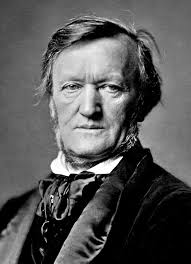
If the global history of classical music possesses an architect who took the harmonic foundations of the West and tensioned them to the absolute limit of physical and conceptual rupture, that name is Richard Wagner. The German composer frequently suffers from the reductive cliché of being a mere purveyor of soundtracks for mythological fantasies. In reality, Wagner operated at an unforgiving technical and acoustic voltage. He was the most radical sound engineer of the 19th century, expanding the orchestral spectrum to demand a lean, agile musculature where the raw tactile edge of the attacks and the sheer density of the layered textures unite to construct a living, three-dimensional, high-definition organism. Wagner did not merely write operas: he engineered acoustic cathedrals that swallow space and redraw the floorboards beneath the listener.
To listen to Wagner today with a high-fidelity pair of headphones is to understand that immersion is not a static concept. His writing demands physical presence—a surgical dynamic response capable of capturing the raspy growl of the low brass and sustaining the psychological suspense of harmonies that flatly refuse to resolve, colliding head-on with the silence of the studio.
The Engineering of Color and the Geometry of the Wall of Sound
Wagner’s definitive signature in composition architecture was his concept of “unending melody” and the technique of infinite modulation. He abolished rigid divisions between arias and recitatives to create a continuous flow of acoustic energy, where sound crawls and expands through dense instrumental blocks perfectly balanced across the frequency spectrum.
This mathematical precision is precisely what drives the physical traction of his work. By fusing the woodwinds and brass with the strings so seamlessly that no element remains loose, Wagner builds a wall of sound that is thick and dark, yet entirely stripped of unnecessary ornamental fat. The sound gains a tactile vividness where harmonic suspense functions as a high-voltage engine, placing the listener in a permanent state of tension.
The Crown Jewels: The Tectonic Impact of the Ride and the Sacred Suspense of Tannhäuser
If you want to experience the authentic voltage and physical force of this orchestral engineering without an instruction manual, your mandatory turning points reside within the overwhelming sonic mass of the Ride of the Valkyries (from Die Walküre) and the continuous traction of the Overture to Tannhäuser.
The jaw-dropping moment in the Ride of the Valkyries strikes when we strip our ears of pop-culture clichés and focus purely on the frequency engineering. The work cuts open the silence with a feverish whirlwind of strings and high woodwinds at the top of the spectrum. But the genuine punch to the gut hits when the trombones and horns fire the main theme in unison across the mid and low registers. The acoustic articulation here must be surgical: with reference headphones, you can feel the vicious rasp of the metal, the rustic friction of air through the bronze tubes, and the massive displacement of air in the low frequencies driving straight into the chest. It is a three-dimensional sonic mass of military precision, delivering a definitive acoustic impact.
Conversely, the polar opposite of dynamic suspense hits during the Overture to Tannhäuser. The work opens with the famous Pilgrims’ Chorus, sketched in a whispered pianissimo across the woodwinds that demands high definition to capture the subtlest overtones. As the theme drives forward, Wagner adds layers upon layers of strings in continuous textures that ascend the sonic spectrum like a tide of steel. The friction of the bows and the brio demanded of the brass construct a monumental, dense wall of sound that bites into the mid frequencies with brutal physical force, proving that Wagnerian writing knows how to crush with absolute elegance.
The Invitation
Richard Wagner demonstrated to the world that monumentality is born from the indomitable courage to transform the orchestra into a single block of indivisible energy. He transformed infinite modulation into the absolute backbone of absolute drama.
So, here is our invitation for your ritual tonight: isolate yourself entirely from the frantic noise and static of everyday life, slip on your finest pair of headphones, and press play on these gears of bronze and drama. Seek out interpretations that fundamentally master the tactile equilibrium and overwhelming structural weight of this score—such as the fiery, surgical precision of Sir Georg Solti leading the Vienna Philharmonic in the legendary Ring cycle, the monumental electricity delivered by Wilhelm Furtwängler, or the raw, visceral virtuosity of Karl Böhm at Bayreuth. Close your eyes, absorb the impact of these infinite masses, and let Wagner’s indomitable engineering entirely organize the chaos of your day.