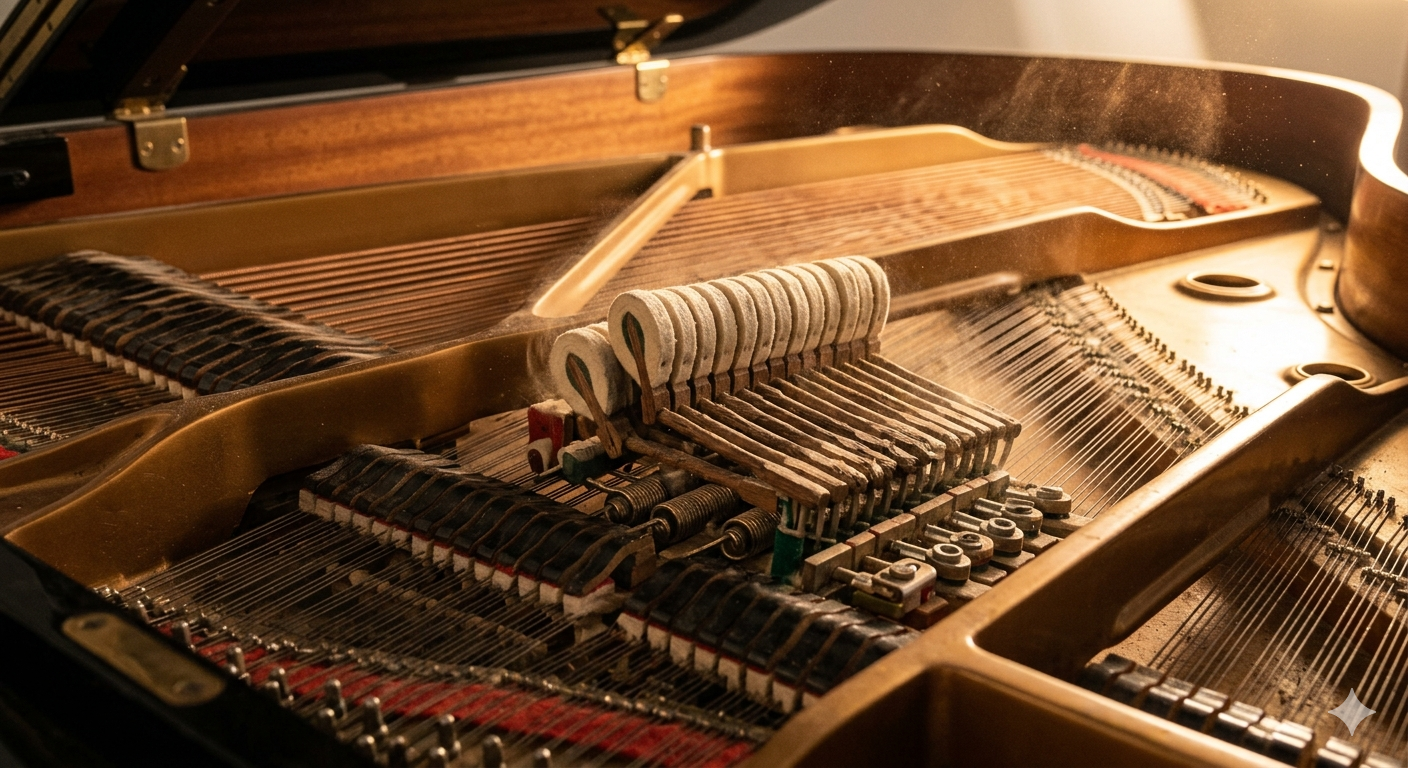

If the global history of classical music possesses a titan who took the 19th-century grand piano and mutated it into a high-definition weapon of mass destruction, that name is Franz Liszt. The Hungarian composer and virtuoso frequently suffers from the reductive cliché of being a mere showman for hysterical crowds. In reality, Liszt operated at an unforgiving technical and conceptual voltage. He was the most radical acoustic engineer of his era, redesigning pianistic writing to demand a lean, agile musculature completely stripped of vague ornament, where the raw tactile edge of the attacks and the sheer weight of the sonic masses challenge the physical limits of metal and wood. Liszt did not play the piano: he extracted from it the three-dimensional density of a full orchestra.
To listen to Liszt today with a high-fidelity pair of headphones is to understand that speed is not a simple exercise in exhibitionism. His writing demands physical presence—a surgical dynamic response capable of biting into the low frequencies with percussive fury and sustaining the electricity of abrupt transitions that collide head-on with the silence of the studio.
The Engineering of Virtuosity and the Geometry of Demonic Sound
Liszt’s definitive signature in composition architecture was the transformation of the piano into a total-attack percussive instrument. Weaponizing the newly developed cast-iron frames of his era’s pianos, he drove technique forward into an unprecedented three-dimensional vividness. There is zero structural fat in his mature pages; there is a rigorous geometry that organizes the chaos and channels the energy with military precision.
This mathematical precision is precisely what drives the mechanical traction of his work. Through colossal leaps, double octaves executed at a blistering speed, and chromatic modulations that scratch at traditional tonal stability, Liszt places the listener in a permanent state of tension. The sound gains an iron contour and a tactile rawness that demands absolute brio from the performer’s fingertips.
The Crown Jewels: The Mephistophelean Attack of the Sonata in B Minor and the Indomitable Brio of Mazeppa
If you want to experience the authentic voltage and tectonic force of this pianistic engineering without an instruction manual, your mandatory turning points reside within the monumental suspense of the Sonata in B Minor, S. 178 and the acoustic punch of the Transcendental Étude No. 4 “Mazeppa”.
The jaw-dropping moment in the Sonata in B Minor strikes within its seamless, single-movement cyclic structure. The work cuts open with mysterious, muted staccato notes in the lower register, creating a claustrophobic environment pregnant with tension. But the genuine punch to the gut hits when the main theme erupts in violent, cascading octaves: the piano collides with a slashing aggressiveness that fractures the silence. The acoustic articulation here must be surgical: with reference headphones, you can feel the massive physical displacement of air in the low frequencies and the dry impact of the hammer hitting the metal strings. It is a colossal sonic mass driving straight into the chest, delivering a definitive acoustic impact.
Conversely, the polar opposite of raw physical opulence hits during the étude Mazeppa. The work erupts with a cascade of heavy chords, clearing the path for a heroic theme where the hands cross at high speed while the left hand executes swirling scales that slash across the sonic spectrum. The sheer friction and brio demanded are brutal: this is matter in a state of trance, operating as an unforgiving mechanical engine that bites into the mid and low frequencies with monumental force, proving that Liszt’s piano is an extension of pure dynamic power.
The Invitation
Franz Liszt demonstrated to the world that transcendentality is born from the indomitable courage to stretch the limits of the instrument to the point of physical exhaustion. He transformed the percussive attack into the absolute backbone of absolute Romanticism.
So, here is our invitation for your ritual tonight: isolate yourself entirely from the frantic noise and static of everyday life, slip on your finest pair of headphones, and press play on these gears of iron and ebony. Seek out interpretations that fundamentally master the tactile equilibrium and overwhelming structural weight of this score—such as the fiery, surgical precision of Maurizio Pollini, the monumental electricity delivered by Martha Argerich, or the raw, visceral virtuosity of Claudio Arrau and Sviatoslav Richter. Close your eyes, absorb the impact of these infinite octaves, and let Liszt’s indomitable engineering entirely organize the chaos of your day.