
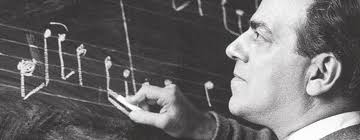
If the history of Western music boasts a monumental architect who took the rigid, crystalline forms of European classicism and melted them down in the incandescent heat of a purely telluric identity, that name is Heitor Villa-Lobos. Armed with an audacious primitive instinct and a surgical intellect, the Brazilian master never asked for permission: he completely redrew the map of universal music by proving that the intricate counterpoint of J.S. Bach and the syncopated pulse of Rio de Janeiro’s street corners orbited the exact same sensory universe. Villa-Lobos operated at a unique electrical voltage. He did not merely imitate nature; he cannibalized it, transforming bird calls, the swaggering slang of street chorões, and the suffocating density of the Amazon rainforest into a high-definition symphonic organism where raw, tactile grit and sophisticated engineering march hand in hand.
To listen to Villa-Lobos today with a high-fidelity pair of headphones is to be completely run over by a torrential downpour of colors and frequencies that defy the structural limits of traditional instrumentation. His technical knockout is physical, relentlessly rhythmic, and deeply visceral.
Global Conquest: Shockwaves in Paris and the American Triumph
Unlike many artists who required a patronizing nod from European institutions just to breathe, Villa-Lobos arrived in the Northern Hemisphere with the brilliant arrogance of a genius who knows he carries the future in the pocket of his vest. When he landed in Paris in the 1920s, funded by close friends and mecenas, he dropped a definitive line that would map out his international legacy: “I didn’t come to study. I came to show you what I’ve done.”
And show them he did. In the French capital—the absolute epicenter of the global avant-garde—his performances triggered a massive aesthetic earthquake. Jean Cocteau, Florent Schmitt, and the celebrated iconoclast Edgard Varèse stood paralyzed by the raw tactile edge and freedom of a polyphony that entirely bypassed traditional conservatory handbooks. Paris unconditionally capitulated to the elegant aggressiveness of his Choros.
Decades later, in the 1940s, it was the United States‘ turn to witness the crushing weight of the Brazilian genius. Invited by the legendary conductor Leopold Stokowski, Villa-Lobos embarked on triumphant cross-country tours, directing the absolute elite of American orchestras—including the New York Philharmonic, the Boston Symphony, and the Chicago Symphony. The critics at The New York Times and the packed crowds at Carnegie Hall simply did not know how to process this unprecedented wall of sound. He consolidated his position as one of the most respected titans on the international circuit, receiving heavy commissions from global ensembles and recording his own catalog in France with Europe’s finest musicians. Villa-Lobos was never an exotic, token guest at the high table of Classicism; he took his seat at the head of the table by absolute right of intellectual conquest.
The Choro Weaver and the Geometry of the Bachianas
Behind the indomitable, cigar-chomping persona that conquered the world’s greatest stages lay an obsessive, rigorous sound engineer. By building the Bachianas Brasileiras and the Choros, he engineered a radically new dialogue: the harmonic clarity of the Old World seamlessly fused with the syncopation, swagger, and malice of Brazilian urban rhythm.
His writing for cello, piano, or acoustic guitar is entirely stripped of cheap, sentimental fat—offering instead a thick, muscular physical presence. The melodic lines do not float smoothly; they scratch, pulse, and demand an unforgivingly precise attack from performers. This is a tactile voltage where the slightest hesitation breaks the spine of a complex, feverish polyphony. Villa-Lobos bites hard into tradition and returns a sonic architecture packed with pure muscle and raw electricity.
The Crown Jewels: The Gallop of Bachianas No. 2 and the Primitive Trance of Choros No. 10
If you want to experience the authentic voltage and cinematic staging of this writing without an instruction manual, your mandatory turning points reside within the mechanical knockout of The Little Train of the Caipira (Bachianas Brasileiras No. 2) and the polyphonic delirium of Choros No. 10 (“Rasga o Coração”).
The jaw-dropping moment in O Trenzinho do Caipira stands as a monumental masterclass in orchestral sound design elevated to high art. Villa-Lobos deploys native Brazilian percussion instruments—the chocalho, the reco-reco, the ogan, and the ganzá—and couples them with short, biting string bowings to mimic the physical traction and escaping steam of a locomotive cutting through the rural interior. The acoustic articulation here must be surgical: you can feel the crushing weight of iron in the low frequencies and the frantic buildup of speed in the staccato winds. When the main theme finally spills open, wide and generous, the lyrical contrast hits the listener directly in the chest.
Immediately following, the absolute polar opposite of sonic impact hits via Choros No. 10—the very piece that forced Paris audiences to hold their collective breath. The zenith strikes when a mixed choir enters, firing off frantic, onomatopoeic syllables in a maddening, trance-like pulse while the orchestra underneath fractures the floorboards with dense, dissonant walls of sound. The brilliant overlay of a melancholy urban melody by Anacleto de Medeiros against the crushing, primitive weight of the jungle creates a high-definition sonic mass that drives forward without allowing a single gasp of air. It is a total dynamic punch—a wall of sound delivering a definitive acoustic knockout.
The Invitation
Heitor Villa-Lobos proved to the world that monumental art does not need to wear a European tuxedo to command absolute authority. He demonstrated that the true avant-garde is born from raw edge, from friction, and from the sheer courage of laying your own soul right on the knife’s edge.
So, here is our invitation for your ritual tonight: clear your mind of the noisy static and frantic rush of everyday life, slip on your finest pair of headphones, and press play on this monument of identity. Seek out interpretations that master the tactile equilibrium and sharp brio of this score—such as the historic recordings conducted by Villa-Lobos himself leading the Orchestre National de la Radiodiffusion Française, the surgical precision of Isaac Karabtchevsky helming OSESP, or the raw, visceral virtuosity of Julian Bream on the guitar. Close your eyes, absorb the electricity of these tropical frequencies, and let the indomitable architecture of Villa-Lobos entirely redraw the landscape of your day.