
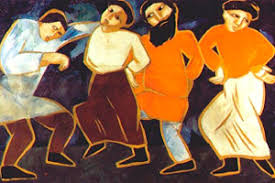
If the history of nineteenth-century musical nationalism needed to pinpoint the exact moment when the soul of a people stopped being a dry folkloric study and transformed into an orchestral earthquake of pure vitality, that moment is called Antonín Dvořák. When the Bohemian composer published his first set of Slavic Dances, Opus 46 in 1878, he wasn’t just writing entertainment music; he was signing the definitive manifesto of a culture that pulsed with unapologetic pride, human warmth, and a visceral connection to the land. Originally scored for piano four-hands at the request of his publisher Simrock—who desperately wanted a bestseller to rival Brahms’s Hungarian Dances—Dvořák immediately dressed them in the brilliant clothes of the grand orchestra, creating a body of work exploding with timbral and rhythmic exuberance that leaps off the score straight into the listener’s nervous system.
To listen to Opus 46 today is an intensely tátil and electrifying experience. Dvořák doesn’t simply copy tavern tunes; he captures the raw essence of peasant rhythms like the Furiant, the Dumka, and the Polka and elevates them through a high-definition symphonic architecture, where clean attacks and contrasting orchestral colors generate pure cinematic movement.
The Weaver of Rhythm and the Blessing of Brahms
Until the release of the Slavic Dances, Dvořák was a humble, struggling composer surviving in the creative shadows of Prague. It was the razor-sharp eye of Johannes Brahms that recognized the sheer genius in this young man who treated rhythm with such intoxicating freedom. Unlike other nationalist composers who merely adapted literal folk melodies, Dvořák did something far more brilliant: he invented his own themes from scratch but injected them with the exact rhythmic DNA and rapid mood swings typical of Bohemian countryside dances.
In his hands, the orchestra becomes a living, agile organism. The clever play of accents—where strong beats shift places unexpectedly—creates a contagious physical tension. Dvořák flawlessly balances deep Slavic poetic melancholy with sudden explosions of radiant, untamed joy, proving that absolute technical refinement can walk hand-in-hand with the raw muscle of popular music.
The Crown Jewel: The Technical Knockout of the Furiant and the Contrast of the Dumka
If you want to experience the true voltage and architectural genius of Dvořák’s Opus 46 without needing a roadmap or an instruction manual, your mandatory turning points are Dance No. 1 in C Major (Furiant) and Dance No. 2 in E Minor (Dumka).
The absolute jaw-dropping element in Dance No. 1 lies in the joyous violence of its opening bars. The Furiant is a lightning-fast dance driven by constant metric shifts that playfully deceive the ear. The initial attack of the brass and percussion delivers a total technical knockout: the listener is thrown headfirst into a rustic festival, where the surgical precision of the strings and the shimmer of the cymbals slice through the air.
Immediately after, in Dance No. 2, Dvořák displays his immense dramatic range with the Dumka, a melancholic folk ballad that is suddenly interrupted by fast, witty interludes. The transition here is achieved with extraordinary, tátil delicacy: the woodwinds sing a nostalgic, lyrical lament that evokes the misty landscapes of Central Europe, only to explode moments later into a high-velocity sprint. This is high-definition emotion and contrast at its finest.
The Invitation
Antonín Dvořák demonstrated to us through his Opus 46 that concert music never belongs locked away inside solemn marble halls; it can and should breathe the fresh air of the streets, the fields, and popular festivals. He proved that the heartbeat of the people, when shaped by genius, attains a monumental dimension.
So, here is our invitation for your ritual tonight: choose a moment when you need a direct injection of pure energy and vitality, slip on your finest pair of headphones, and press play on this rhythmic monument. Seek out interpretations that masterfully grasp the electricity, the bounce, and the surgical rawness of this score, such as the legendary recordings of the Czech Philharmonic under Rafael Kubelík (boasting an unbeatable, native authenticity), the burning fire and opulence of the Berlin Philharmonic with Herbert von Karajan, or the pristine, tátil clarity of George Szell leading the Cleveland Orchestra. Close your eyes, absorb the massive impact of this ocean of color, and let Dvořák’s rhythm drive your day forward.