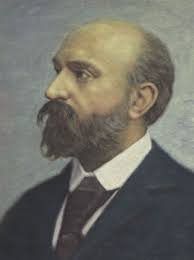
If the history of late-nineteenth-century French music boasts composers who painted bright, transparent, solar canvases, there is an aristocrat of sound who preferred to focus his genius on the colors of sunset, psychological mist, and the mystery of contained passions. His name was Ernest Chausson. Living at the very heart of a fermenting Paris—and being a highly refined art collector who rubbed shoulders with minds like Monet, Mallarmé, and Debussy—Chausson sculpted a body of work that is painfully beautiful. In his music, the structural rigor inherited from his master César Franck fuses flawlessly with an almost hypnotic poetic sensibility. His music never begs for easy applause or empty, showy virtuosity; it operates like a slow, intoxicating poison, seducing the listener through rich, dense, and intensely tátil harmonies.
To listen to Chausson today is to step into a twilight universe. Every note carries the crushing weight of a contained urgency—a romanticism that is fully aware the old world is crumbling and translates that transition into a melancholic sweetness that cuts straight to the core of the soul.
The Blacksmith of Melancholy and the Shadow of Wagner
Chausson possessed the supreme privilege and the heavy psychological burden of not needing music to survive financially, which transformed him into a fiercely savage self-critic. He suffered over every single bar, pursuing a level of artisanal perfection that aimed to slice away any trace of excess. Deeply fascinated by the monumental dramatic weight of Richard Wagner, Chausson pulled off a genuine aesthetic miracle: he took the sensual chromaticism and opulence of Wagnerism and filtered it through a distinctly French temperament, trading theatrical gigantism for an intimate, perfumed, and heavily refined atmosphere.
In his hands, music flows with a magnetic density. His songs for voice and orchestra (such as the celebrated cycle Poème de l’amour et de la mer) and his chamber music are brilliantly cut gems where melancholy completely sheds any trace of self-pity, elevating itself into pure nobility through an architecture of transparent, enveloping textures.
The Crown Jewel: The Transcendental Knockout of the Poème, Op. 25
If you want to experience the authentic expressive voltage and architectural genius of Chausson without needing a roadmap or an instruction manual, your mandatory and devastating starting point is his Poème for Violin and Orchestra, Op. 25, composed in 1896.
Written under the spell of a short story by the Russian writer Ivan Turgenev regarding the mystical and tragic power of love, this masterpiece thoroughly rejects the traditional structure of a violin concerto. Instead of constructing a vehicle for the soloist to display raw finger speed, Chausson conceived a profound essay in philosophical introspection and sweeping passion.
The absolute jaw-dropping moment arrives during the solo violin’s introduction: a dark, brooding melodic line that emerges out of the orchestra’s silence like a tátil lament, floating completely free of gravity over a dense harmonic carpet. As the piece unfolds, the violin and orchestra engage in a high-voltage emotional dialogue, culminating in a climax of almost unbearable intensity before evaporating into a mysterious pianissimo, like coastal fog dissipating over the sea. It is a total technical knockout delivered through emotional depth and surgical clarity of writing.
The Invitation
Ernest Chausson had his life tragically cut short at the age of 44 in a bicycle accident, leaving the musical world orphaned of one of its most aristocratic minds. He proved to us that melancholy, when shaped by genius and absolute refinement, can transform into the most radiant aesthetic experience in art.
So, here is our invitation for your ritual tonight: choose a moment when the light of day begins to fail, slip on your finest pair of headphones, and press play on his hypnotic Poème, Op. 25 or the monumental Concerto for Piano, Violin, and String Quartet, Op. 21. Seek out interpretations that masterfully grasp both the transparency and the internal fire of this music, such as the legendary recordings of David Oistrakh, the razor-sharp precision of Itzhak Perlman, or the tátil sensitivity of Joshua Bell. Close your eyes, take a deep breath, and feel the subtle impact of this twilight architecture embrace the close of your day.