
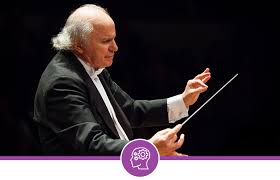
If the history of conducting and symphonic music needed a single figure to capture the essence of magnetic authority and volcanic passion, that name would undeniably be Isaac Karabtchevsky. The maestro is not merely a conductor standing in front of an orchestra; he is an architect of sound—a leader who deeply understands the weight, the voltage, and the hidden electricity running through every single bar of a musical score. While the Old World frequently leaned into a cold, cerebral precision, Karabtchevsky proved that great music needs guts, blood rushing through its veins, and a razor-sharp clarity that leaps off the stage to strike the listener squarely in the chest.
To experience Karabtchevsky’s sonic constructions today—whether leading his historic, legendary tenure at the Brazilian Symphony Orchestra (OSB) or commanding major symphonic bodies across Europe—is an exercise in pure, high-definition acoustics. He is the definitive master of solar energy, utilizing orchestral mass entirely at the service of human drama and raw emotion.
The Builder of Epics and the Soul of Villa-Lobos
Karabtchevsky’s talent and commanding leadership are so absolute that he became the ultimate global ambassador for the musical soul of South America. No one has decoded the rhythmic complexity, the dense forest textures, and the street-level lyricism of Heitor Villa-Lobos quite like him. His complete recording cycle of Villa-Lobos’s Symphonies is both a technical and cultural monument—a total technical knockout that cleared away decades of interpretation and showed the world the untamed, authentic muscle of tropical modernism.
Yet, Isaac’s genius stretches far beyond continental borders. He navigates the monumental gigantism of Gustav Mahler, the sharp expressionistic drama of Igor Stravinsky, and the rich, sweeping textures of Johannes Brahms with the organic ease of someone who commands the forces of nature. Karabtchevsky doesn’t conduct mere notes; he conducts massive walls of air, sculpting orchestral chaos until it crystallizes into absolute clarity where every instrument possesses weight, color, and absolute purpose.
The Crown Jewel: The Seismic Impact of the Orchestral Mass
If you want to experience the true voltage and architectural power that Isaac Karabtchevsky stamps onto his performances without needing an instruction manual, your mandatory destination is his interpretation of Villa-Lobos’s Choros No. 10 (“Rasga o Coração”) or the staggering, climactic plateaus of Mahler’s symphonies.
The absolute jaw-dropping element in a Karabtchevsky performance lies in his sovereign control over dynamics. His physical presence on the podium is a high-precision, tátil dance: he can draw out the most fragile, microscopic whisper from the string section, and within a split second, unleash a volcanic explosion of brass and percussion that literally makes the concert hall floor vibrate beneath your feet. Under his baton, there is no muddy or blurred sound. The textures are transparent, the attacks are surgical, and the rhythm possesses an implacable, cinematic pulse. This is the virtuosity of leadership placed entirely at the service of audience rapture.
The Invitation
Isaac Karabtchevsky demonstrated to us that an orchestra is not simply a gathering of musicians playing at the same time, but a living, breathing, and dangerous organism capable of erecting massive sonic cathedrals or tearing down intellectual certainty. He is the supreme master of the monumental sound, an artisan who shapes bronze and fine crystal with the exact same mastery.
So, here is our invitation for your ritual tonight: set aside a moment of absolute pause, dim the distracting lights around you, and slip on your finest pair of headphones. Press play on one of his definitive recordings of Villa-Lobos or Mahler. Close your eyes, open your perception, and feel the massive, seismic impact of this symphonic ocean. Let yourself be driven by the electrifying force of Karabtchevsky.