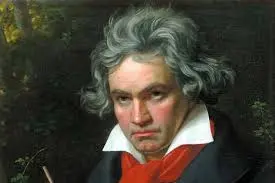
Some people look at statues of Ludwig van Beethoven and see nothing but a stern face, an unapproachable genius carved in cold marble. Total nonsense. If Beethoven were alive today, he wouldn’t be locked away in an ivory tower; he would be the frontman of an electrifying rock band, smashing guitars and captivating stadiums with a raw, almost youthful urgency.
The 19th century had barely begun when this young man from Bonn arrived in Vienna and decided that classical music was no longer meant to be mere background noise for polite aristocratic dinners. To him, a symphony wasn’t a cold mathematical exercise; it was an ocean of emotions where every instrument had its moment to shine—and to scream.
The Triumph of Passion Over Silence
Picture the scene: it is the year 1802, and Beethoven, the most sought-after and celebrated pianist in Europe, discovers he is going irremediably deaf. For any ordinary mortal, that would be the end of the road. For him, it was the fuel for one of the greatest comebacks in art history. Isolated in a countryside village, instead of giving in to self-pity, he chose to pour all his fury, his love, and his hunger for life straight into the musical staff.
From this pulsing crisis, the Symphony No. 3, the Eroica, was born. The moment the needle drops on this piece—or you hit play—what you hear is anything but a well-behaved composition. It begins with two sharp, clean strikes, two luminous chords that throw open the windows of the soul and let the summer sun rush in. It was Beethoven telling the world that the human heart had taken the wheel. From that moment on, melodies gained hooks so irresistible that they stuck in people’s heads the exact same way the biggest pop choruses do today.
The Crown Jewel: A Piano That Cries and Clamors
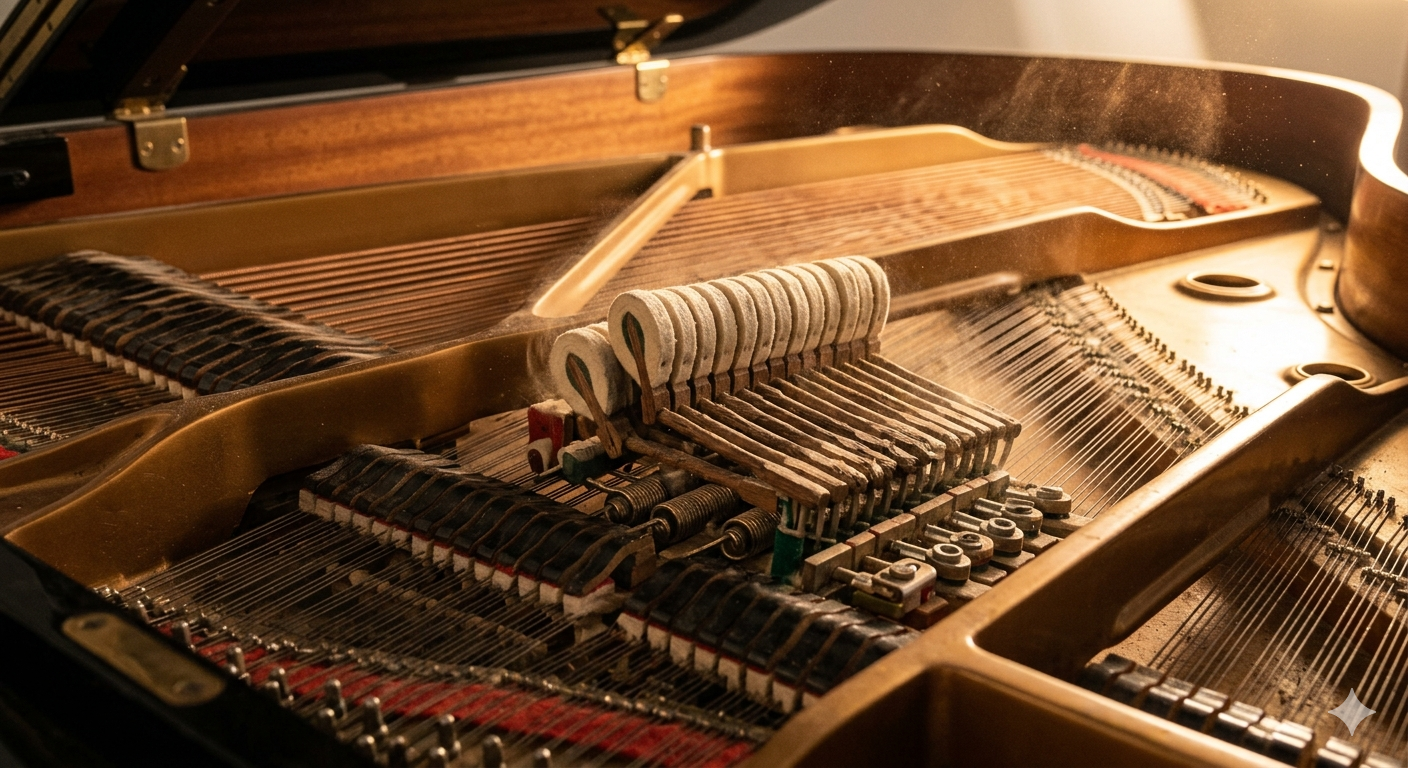
If you want to understand the soul of this man without needing an instruction manual, go straight to the Appassionata Sonata. At the piano, Beethoven played with a visceral, almost physical energy. He didn’t just caress the keys; he dueled with them.
In this sonata, there is a jaw-dropping moment: the absolute contrast between a mysterious whisper, like a secret told in your ear, and an explosion of notes that sounds like a perfect storm crashing down on the keyboard. It is sophisticated, dramatic, and—dare we say?—utterly sexy. It is music in its purest, most aspirational state.
The Invitation
Beethoven left us on a stormy afternoon in 1827, but the sheer electricity he infused into his scores remains completely intact, waiting for us.
Forget the rigid etiquette of the concert hall. Put on your best pair of headphones, close your eyes, and let yourself be carried away by this Prometheus who burned his fingers just to give us the fire of Romanticism. It is an invitation to feel, with an open heart and no strings attached.